
Sep 5, 2026LED Warning Light Bar
How OEM Buyers Should Specify a Work Light with a Custom Logo Panel
A B2B guide to balancing lighting performance, private-label artwork and sample approval in branded LED work-light projects.
How OEM Buyers Should Specify a Work Light with a Custom Logo Panel
A branding panel can make a conventional work light more valuable to an equipment manufacturer or private-label distributor. It can also create artwork errors, inconsistent appearance and slow approvals if the branding requirement is not defined early.
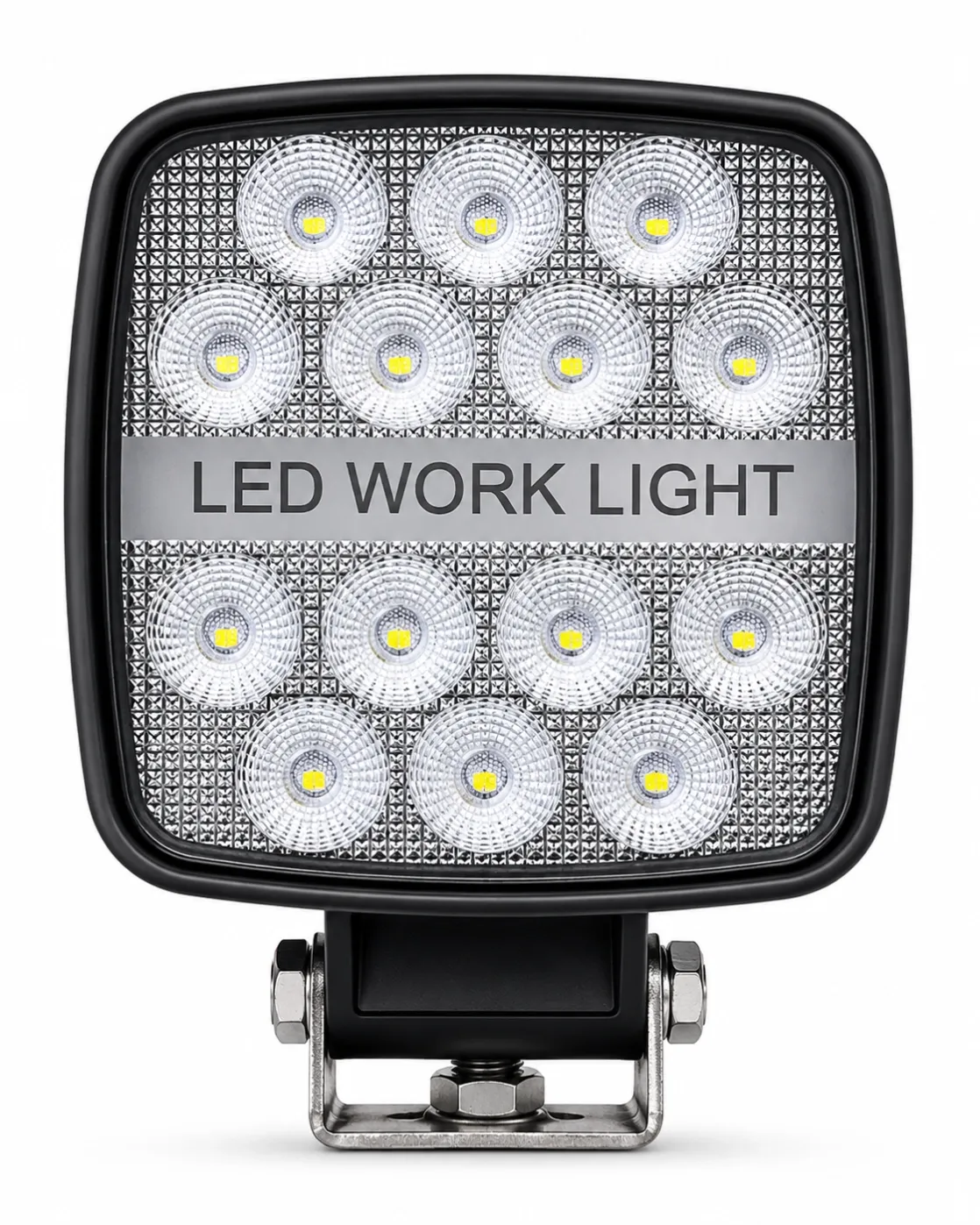
WCZ1 uses 14 LEDs around a central non-illuminated text area. The product should be specified as both a lamp and a branded component.
Separate Technical and Branding Requirements
The center panel does not emit light. Its purpose is product identity, so buyers should not describe it as an illuminated logo or position light.
The lamp uses 14 LED chips. Based on the supplied 1.5W-per-LED rating, calculated power is 21W. A lumen figure is not provided, so buyers should request photometric data or test samples before publishing output claims.
Define the Artwork Process
A complete branding specification should include logo dimensions, color, font, placement, printing method and acceptable color tolerance. The supplier should provide an artwork proof before a physical sample is produced.
The final sample should be reviewed under normal lighting and after environmental exposure. A logo that looks correct on screen may be too small, low-contrast or difficult to reproduce on the finished panel.
Why the Non-Illuminated Panel Can Be Practical
A non-illuminated panel avoids adding another electrical function and keeps the branding visible when the lamp is off. This can help machinery brands create a consistent equipment appearance without changing the work-light wiring.
The commercial value is stronger brand recognition and clearer private-label differentiation, not higher light output.
10–32V DC for Common Equipment
The voltage range supports common 12V and 24V systems, allowing the same model to serve agricultural, construction and commercial-vehicle applications.
The connector, cable length and switching method should be defined in the RFQ. Branding consistency does not compensate for electrical inconsistency.
Bracket and Installation Review
WCZ1 uses an adjustable metal bracket. Buyers should test fastener access, aiming range, vibration and clearance on the target machine.
The center panel reduces part of the optical area, so beam performance should be evaluated at the intended mounting height and distance.
Protect the Catalog from Unsupported Claims
The source does not state lumen output, IP rating or certification. Buyers should request documents before adding those claims to packaging or websites.
A Complete OEM RFQ
Specify LED count, calculated power, voltage, beam requirement, connector, cable, bracket, artwork, packaging, minimum quantity, sample process and required documents.
WCZ1 is commercially attractive when the buyer needs a recognizable branded lamp and manages artwork approval with the same discipline as electrical and mechanical validation.
