Sep 2, 2026 LED Truck Driving Light
How to Choose a Super Slim Single-Row LED Light Bar
A practical B2B guide to light-bar size, wattage, effective lumen, beam pattern, voltage, materials and supplier documentation.
How to Choose a Super Slim Single-Row LED Light Bar
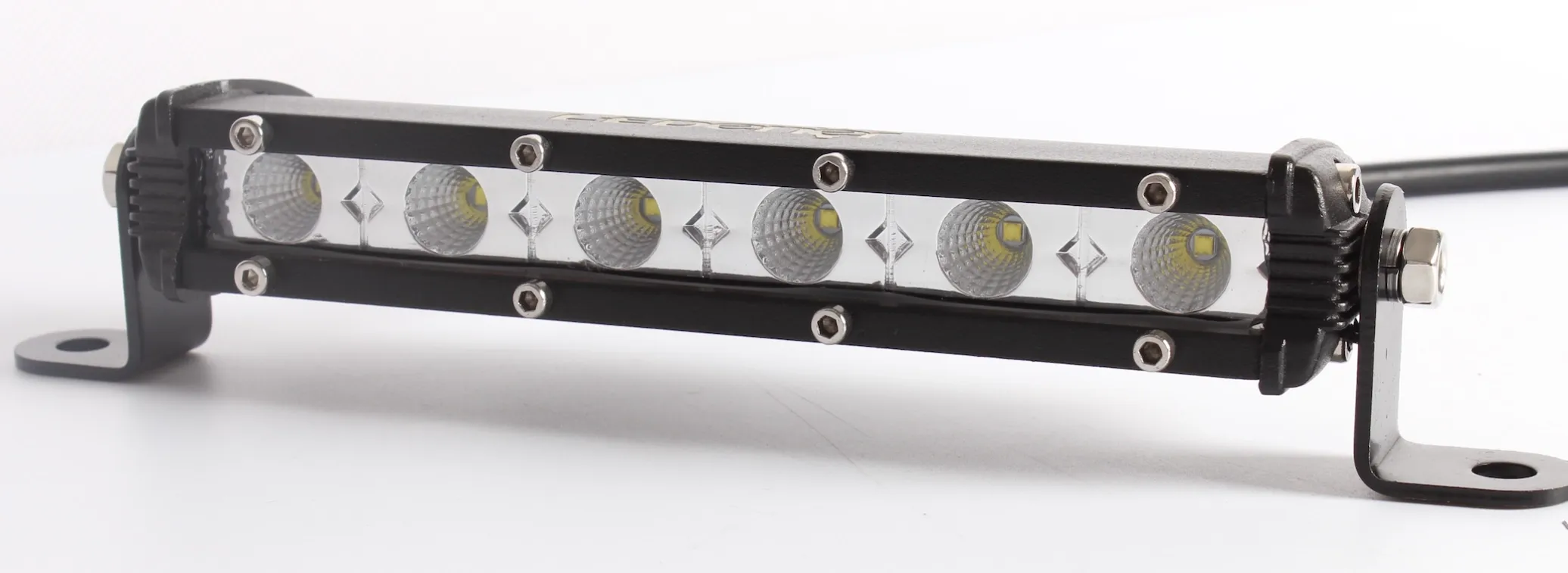
A slim LED light bar can solve a real packaging problem on trucks, pickups and work equipment: the vehicle needs more usable light, but the available mounting space is limited. For B2B buyers, however, “slim” is not a complete specification. The correct product must fit the vehicle, provide the right beam, match the electrical system and arrive with consistent documentation.
Importers, 4×4 brands, equipment manufacturers and fleet upfitters should compare a single-row LED light bar through the complete application. Choosing by advertised wattage alone can lead to weak beam performance, wiring changes, bracket problems or unsupported waterproof claims.
- Define the Lighting Task First
Start by identifying where the light bar will be mounted and what the operator needs to see. A roof-mounted off-road bar, bumper-mounted driving light and close-range work light have different beam requirements.
Ask whether the priority is longer-distance forward visibility, a broad nearby work area or a balance of both. This decision should be made before selecting size or power. It prevents a distributor from stocking a high-output bar whose beam pattern does not match customer use.
The application should also state whether the lamp is intended only for off-road or work-site use. Auxiliary-lighting rules vary by market, so the destination country and planned road use should be part of the RFQ.
- Check the Installation Envelope, Not Only Nominal Size
A 20-inch product name does not always describe the exact body length or the distance between mounting points. Buyers need the actual bar length, height, depth, bracket range and cable-exit position.
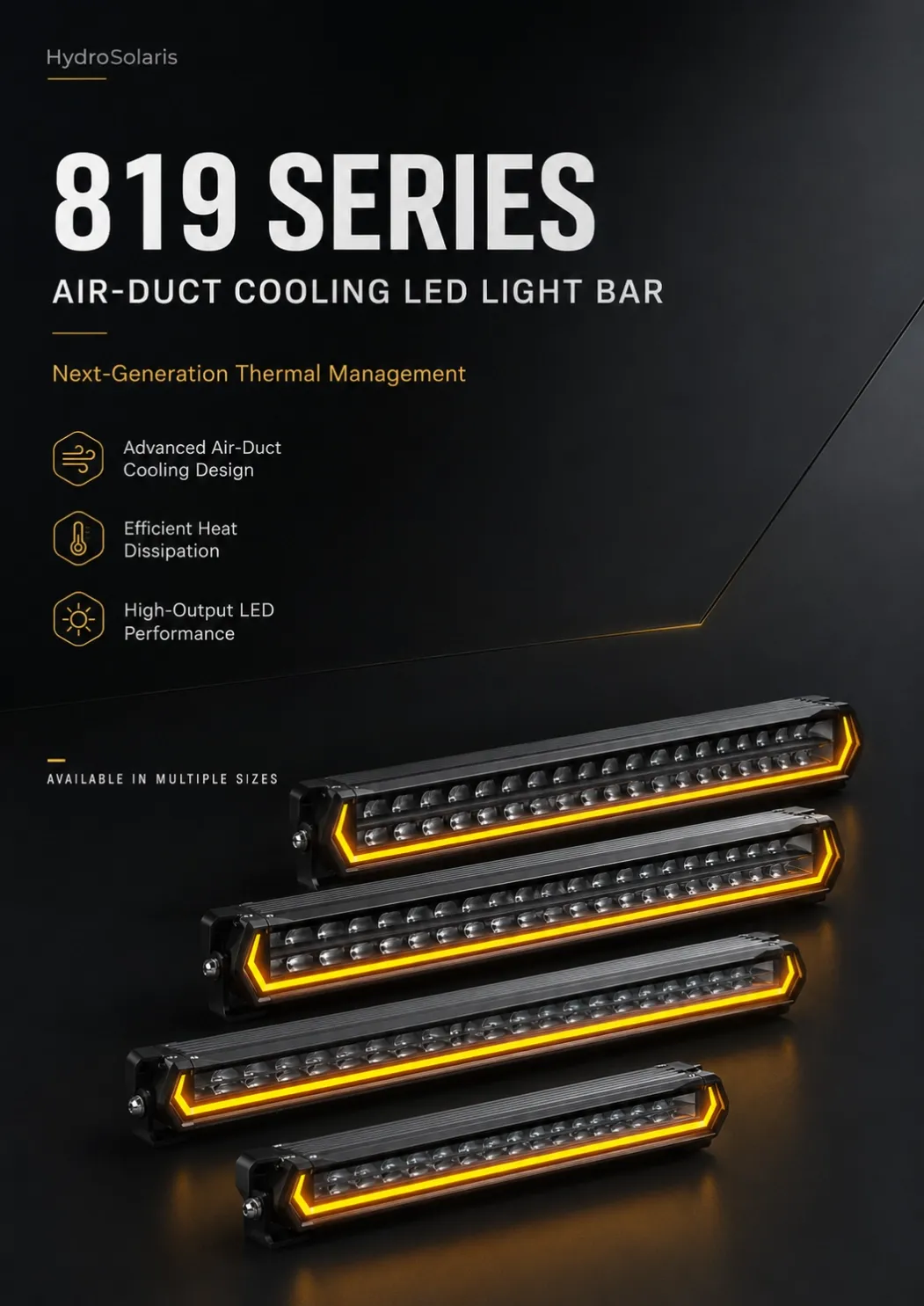
The LS006 brochure provides seven nominal sizes and corresponding body lengths:
7 inch: 176 mm
13 inch: 331 mm
19 inch: 485 mm
25 inch: 641 mm
31 inch: 796 mm
37 inch: 944 mm
49 inch: 1,248 mm
This range helps an OEM match the lamp to different vehicle platforms. The super slim single-row design can reduce interference with grilles, bumpers, roof lines or equipment sightlines.
Before a volume order, request a dimensional drawing and install a sample on the actual vehicle. A light bar can fit between two body features but still create problems if the bracket fasteners or cable cannot be accessed.
- Use the Size Matrix to Control Inventory
A coordinated family of lengths can reduce the complexity of sourcing from several unrelated suppliers. Distributors can offer compact, medium and long versions while maintaining a more consistent appearance and product story.
The benefit depends on clear variant control. Every purchase order, carton and product label should identify the selected length, wattage and beam pattern. If the supplier has separate size codes, they should be added to the approved specification.
Without disciplined variant identification, a warehouse can receive visually similar spot, flood and combo versions under one generic model name. That creates picking errors and customer returns even when the lamps themselves work correctly.
- Compare Effective Lumen With Wattage and LED Count
The LS006 product material lists wattage, LED quantity and effective lumen for each size:
7 inch: 18W, 6 LEDs, 1,260 lm
13 inch: 36W, 12 LEDs, 2,520 lm
19 inch: 54W, 18 LEDs, 3,780 lm
25 inch: 72W, 24 LEDs, 5,040 lm
31 inch: 90W, 30 LEDs, 6,300 lm
37 inch: 108W, 36 LEDs, 7,560 lm
49 inch: 144W, 48 LEDs, 8,820 lm
These figures are more useful together than separately. Wattage indicates electrical load, LED count describes configuration and effective lumen provides an output reference.
For procurement teams, the business value is better size-to-output matching. A buyer can avoid paying for a longer lamp when the application does not need it, or choosing a compact version that leads to customer dissatisfaction.
Request the test method behind the lumen figures. Confirm whether the values are measured output, calculated output or another definition. Production sampling should use the same method as the approved quotation.
- Select Spot, Flood or Combo Beam Deliberately
A spot beam concentrates light for longer-distance visibility. A flood beam spreads light across a wider nearby area. A combo beam is intended to provide both central reach and side coverage.
The 7-inch LS006 is listed with spot or flood options. The 13- through 49-inch sizes also offer a combo option.
The correct choice depends on mounting height, vehicle speed and work area. A roof-mounted flood beam may reflect from the hood, while a narrow spot beam may leave dark areas near a slow-moving work vehicle.
A sample beam test should be carried out at the planned mounting angle. Photographs can help compare patterns, but camera exposure should not replace direct evaluation or photometric data.
- Confirm Voltage, Current and Wiring
The LS006 brochure states a 10–30V DC operating range. This supports common 12V and 24V vehicles and may allow a distributor to reduce voltage-specific inventory.
The purchasing specification should also cover current draw, cable length, wire gauge, connector, polarity protection, switching and harness requirements. The longest version has a listed 144W load, so the vehicle circuit, relay, fuse and wiring should be selected accordingly.
A complete wiring package can reduce installation labor, but the supplied brochure does not state that a harness or switch is included. Buyers should therefore list required accessories rather than assume they are in the carton.
- Evaluate Housing and Brackets as a Thermal and Mechanical System
The brochure identifies an aluminum housing and stainless-steel brackets. Aluminum is commonly used to manage heat and weight. Stainless-steel brackets provide a mounting interface that can be adjusted for the required beam angle.
For B2B buyers, material consistency affects thermal performance, appearance and fit. Request details about housing finish, bracket thickness, fasteners and corrosion testing if the lamp will be used around salt, fertilizer or industrial chemicals.
The material name alone does not prove long-term corrosion resistance. A sample installation and environmental evidence are more reliable than a general “heavy duty” claim.
- Do Not Invent Environmental or Compliance Claims
The supplied LS006 brochure does not list an IP rating, operating-temperature range, EMC approval or road-use certification. A buyer should not copy these specifications from a different light bar or assume them from the product’s appearance.
Request test reports for the exact model and size before advertising waterproof or compliance performance. Confirm whether approvals apply to every length or only to a tested representative version.
This approach protects importers and private-label brands from warranty disputes, marketplace complaints and relabeling costs. Transparent specifications also build more trust than unsupported claims designed only to increase clicks.
- Inspect Samples for Production Consistency
Sample approval should cover more than brightness. Check lens alignment, housing finish, fastener torque, bracket fit, cable length, connector, beam pattern, electrical load and visible color consistency.
Packaging should protect the lens and brackets from scratching. Cartons should identify size, beam pattern and voltage clearly. For private-label orders, confirm logo position, label artwork, barcode and instruction language before production.
Agree on the inspection standard and warranty procedure. Consistent batch control reduces the risk of receiving several visually different versions under the same product link.
- Use a Complete RFQ Checklist
A practical RFQ for a super slim LED light bar should specify:
Vehicle and intended application
Destination market and road-use status
Nominal size and exact maximum installation envelope
Required wattage and effective lumen reference
Spot, flood or combo beam
System voltage and maximum current
Cable, connector, relay, fuse and switch requirements
Housing finish, bracket and fastener requirements
Required IP, temperature, EMC and other test documents
Packaging, branding, barcode and instructions
Order quantity, annual forecast and warranty process
The best purchasing decision is not the light bar with the largest number in the headline. It is the version whose dimensions, beam, output, electrical load and documentation match the vehicle and the buyer’s sales market. That disciplined comparison reduces installation changes, slow-moving inventory and avoidable after-sales costs.