Jul 22, 2026LED Warning Light Bar
LED Number Plate Lights for Trucks and Trailers: A B2B Buying Guide
A practical sourcing guide for truck and trailer LED number plate lights, covering mounting, optical layout, materials, wiring and compliance checks.
LED Number Plate Lights for Trucks and Trailers: A B2B Buying Guide
A number plate lamp is a small component, but a poor sourcing decision can create repeated problems for truck and trailer manufacturers. Uneven plate illumination, incompatible wiring, awkward mounting and missing approval documents can delay production or increase warranty work. B2B buyers should therefore evaluate an LED number plate light as part of a complete vehicle system, not as an isolated low-cost lamp.
This guide explains the checks that importers, trailer manufacturers, truck-body builders, fleet suppliers and replacement-parts distributors should complete before approving a license plate lamp.
- Start With the Destination Market and Plate Layout
The first question is not “How bright is the lamp?” It is “Where will the vehicle be sold, and how will the registration plate be installed?” Plate dimensions, mounting space and legal requirements vary by market. The same lamp can produce different results when the plate width, angle or lamp-to-plate distance changes.
A buyer should provide the supplier with a drawing or photograph of the intended installation. For a lamp designed to be mounted on both sides of the plate, the sample test should use the real plate size and the planned mounting distance. This reduces the risk of bright spots near the lamps and darker areas in the center.
For purchasing teams, this step prevents a common commercial problem: approving a component from a bench test and discovering during vehicle assembly that the complete installation does not provide consistent plate illumination.
- Evaluate Surface Mounting as an Installation Decision
A surface-mount LED license plate light can be useful when there is limited space behind the rear panel or when a large recessed cut-out is undesirable. A compact surface-mounted housing may reduce body modification and simplify evaluation on different trailer or truck-body designs.
That installation advantage has direct business value. Fewer panel changes can reduce assembly time, lower tooling requirements and make a lamp easier to adopt in retrofit or replacement programs. However, buyers should still confirm the mounting-hole spacing, fastener access, cable exit direction and clearance around the plate.
A sample fitment should be completed before a bulk order. Ten minutes spent checking a real rear panel can prevent a production batch from requiring drilling changes or improvised brackets.
- Judge Optical Distribution, Not an Unsupported Lumen Number
A registration plate lamp must direct useful light toward the plate. A high lumen claim does not by itself prove good performance. The relevant issue is whether the optical lens distributes light across the required plate area without excessive glare or obvious dark zones.
Clear polycarbonate optics can be designed to control this distribution. For a buyer, the purchasing value is more consistent appearance across vehicles and a lower risk of complaints about unreadable plates. The correct evaluation is a night-time sample test in the intended mounting position, followed by any required photometric test for the target market.
Request photographs of the illuminated plate, but do not rely on photographs alone. Camera exposure can make a weak lamp appear brighter or hide uneven illumination. Model-specific laboratory data is more useful when regulatory approval is required.
- Match Housing and Lens Materials to the Operating Environment
An ABS housing and clear polycarbonate optical lens are practical material choices for a compact lamp. They can provide a lightweight construction and controlled optical surface. The material names, however, should not be treated as proof of weather resistance, impact performance or UV life.
Importers and OEM buyers should ask for the exact environmental tests available for the offered model. If the product brochure does not state an ingress-protection rating, do not add one to sales material. Instead, ask the supplier to confirm the sealing design and provide model-specific evidence before making an IP claim.
This approach reduces purchasing risk because it separates verified performance from assumptions based on materials or appearance. It also helps a distributor avoid warranty disputes caused by specifications that were never documented.
- Confirm Voltage, Current, Polarity and Wiring
“Low power consumption” is useful, but it is not a complete electrical specification. Before approval, the buyer should confirm input voltage, current draw, polarity protection, wire length, wire colors and connector requirements. The proposed lamp must match the vehicle platform and the installation process.
For OEM programs, an agreed connector and cable length can reduce assembly labor and wiring mistakes. For aftermarket distributors, clear electrical labeling can reduce returns from customers who purchase the wrong version. If the brochure does not provide numeric electrical data, the quotation and approved sample should identify it before production.
The same discipline applies to electromagnetic compatibility. Do not assume that an LED lamp has the documents required by a particular market or vehicle program. Request the actual test report or approval reference for the exact model under consideration.
- Treat Compliance as a Document-Control Issue
In many ECE markets, rear registration plate illumination is addressed by UN Regulation No. 4. Other markets can have different national or vehicle-specific requirements. A supplier’s general experience is not a substitute for a certificate covering the exact lamp model.
A professional RFQ should state the destination countries and required standards. The buyer should then verify the model number, approval marking and scope shown on the document. If a brochure does not list a certification, the safe approach is to describe the lamp without a compliance claim until evidence is available.
This protects brand owners and importers from relabeling costs, customs issues and last-minute approval delays. It also gives the supplier a clear target instead of asking for “all certifications,” which can add cost without solving the actual market requirement.
- Check Production Consistency and After-Sales Risk
A visually acceptable sample is only the beginning. B2B buyers should ask how the supplier controls lens appearance, housing color, wiring, assembly and final lighting checks from batch to batch. Replacement parts should remain consistent enough that fleet technicians and distributors do not need to identify several undocumented versions.
Packaging also matters. A compact lamp can still be scratched or damaged if units move inside the carton. Confirm individual protection, carton quantity, label content and any barcode or private-label requirement. For importers, stable packaging and product identification reduce receiving errors and make warranty traceability easier.
- Use a Complete RFQ Checklist
Before requesting a final quotation, provide:
Destination market and required approval documents
Vehicle type: truck, trailer, utility body, RV or specialty vehicle
System voltage and electrical requirements
Plate dimensions and intended lamp position
Mounting-hole spacing and cable exit direction
Wire length, connector and polarity requirements
Order quantity and annual forecast
Packaging, label, barcode and branding requirements
Sample and photometric validation plan
Warranty process and replacement-part expectations
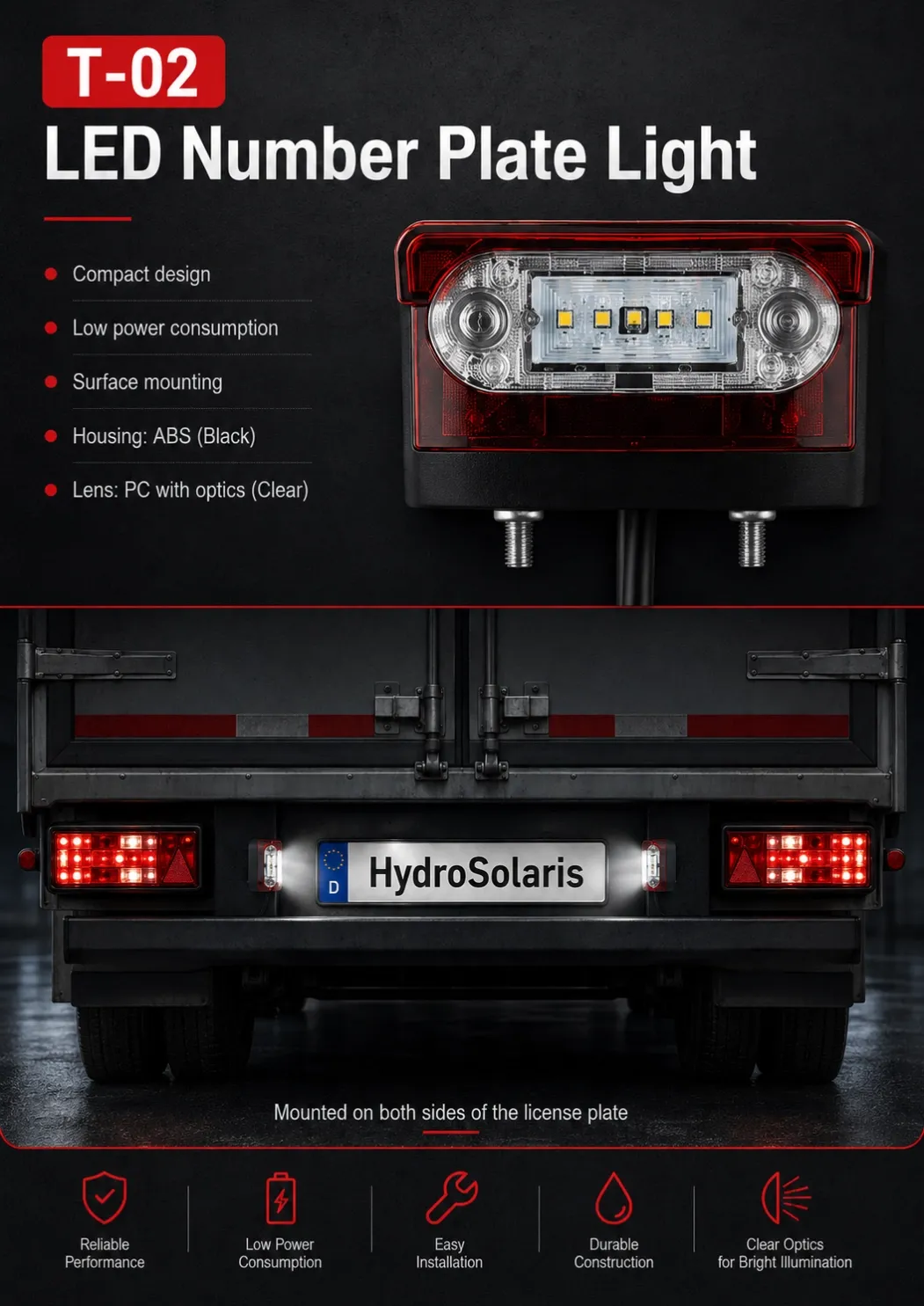
The T-02 is an example of a compact surface-mount LED number plate light with a black ABS housing, clear PC optical lens, low power consumption and a two-side installation layout shown in its product material. Because its brochure does not state voltage, current, IP rating or certification, these points should be confirmed for the exact project before an order or compliance claim.
A disciplined specification process gives buyers more than a technically suitable lamp. It reduces installation changes, unsupported claims, inconsistent batches and avoidable warranty costs. That is the practical value of evaluating a truck or trailer license plate light through the full application rather than choosing on unit price alone.
