Jul 22, 2026LED Warning Light Bar
Single-Row vs Double-Row LED Light Bars: A B2B Buyer’s Guide
A practical comparison for distributors and OEM buyers choosing slim single-row or higher-output double-row LED light bars.
Single-Row vs Double-Row LED Light Bars: A B2B Buyer’s Guide
Single-row and double-row LED light bars are often compared by brightness. For B2B buyers, the better question is which design fits the vehicle program, sales channel and cost target with the lowest risk.
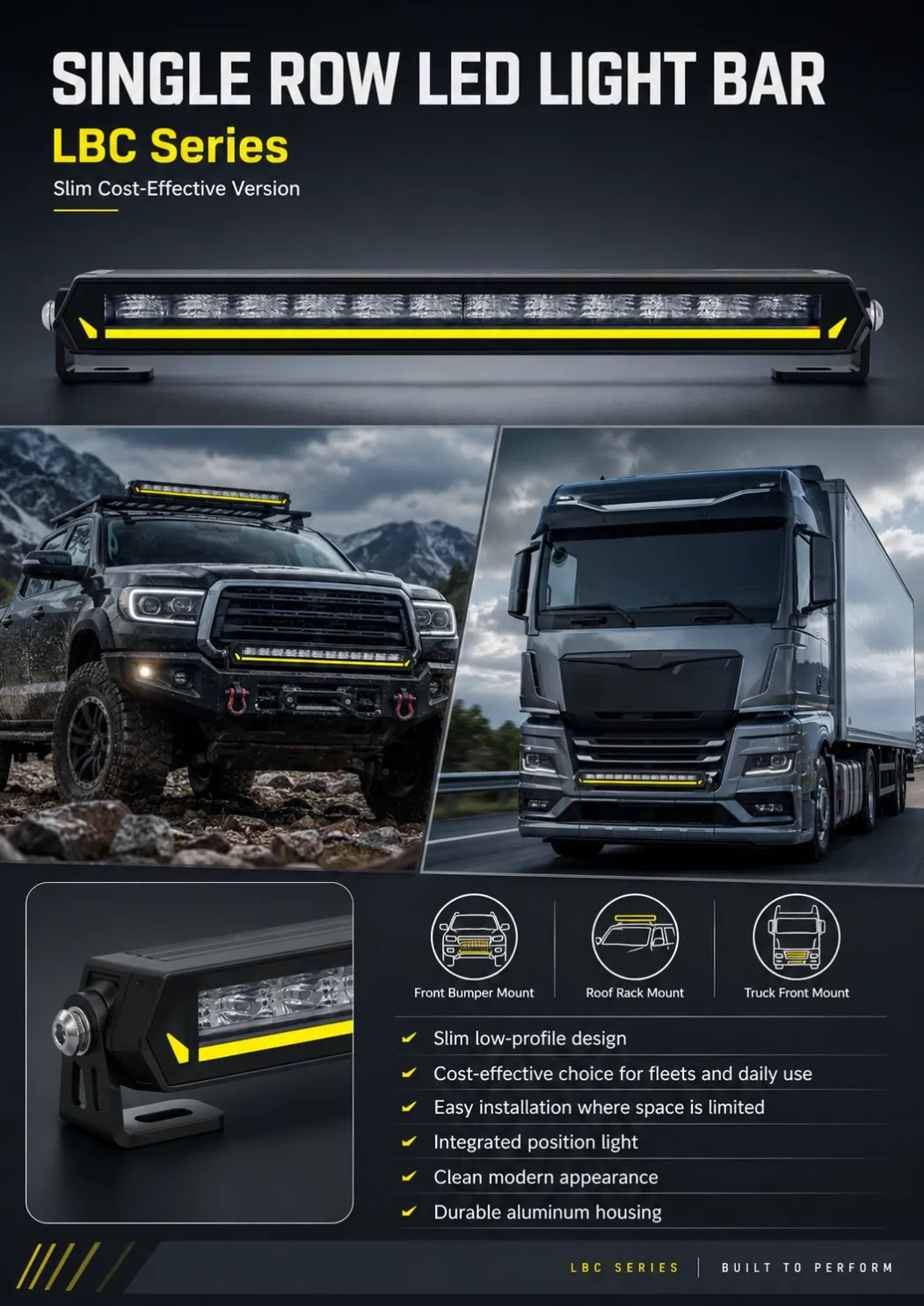
The LBC single-row series is intended for compact, cost-conscious installations. Comparing it with a double-row platform helps procurement teams decide where each type belongs.
Installation Space Comes First
A single-row bar uses a slimmer, lower-profile housing. This makes it easier to install in narrow grille openings, under roof racks or on bumpers where a taller bar may interfere with bodywork or accessories.
The LBC product images show 350, 500 and 650 mm versions. These lengths cover common compact and medium-width mounting positions while keeping the same visual design.
A double-row bar is generally selected when the vehicle can accept a larger housing and higher output is required. Before comparing wattage, engineering teams should measure width, depth, bracket clearance and airflow at the installation point.
Output and Electrical Load
Double-row products contain more LEDs in a similar length and usually draw more current. This can be useful for high-output off-road or work applications, but it also requires larger cables, suitable switching and correct circuit protection.
A single-row design may be the more practical choice for daily fleet vehicles that need useful auxiliary lighting without the electrical and physical demands of the largest bars.
Purchasing teams should ask for exact power and output data for each length. The LBC brochure establishes the series architecture but does not provide those figures, so they should be confirmed before quotations or catalog claims are finalized.
Why a 10–48V DC Range Helps
LBC operates from 10–48V DC. This wide input range supports different truck, off-road and equipment electrical systems.
For distributors, one voltage platform can reduce SKU complexity and lower the risk of supplying the wrong version. For OEM upfitters, it can make the same lighting family usable across several vehicle models.
Position-Light Styling
The LBC series includes an integrated position light, shown in white and amber applications. Combining this function with the main bar can create a cleaner installation and reduce the need for a separate styling lamp.
The business value is product differentiation, but it also creates a compliance task. Buyers should confirm color, wiring logic and permitted road use for every destination market.
Mounting and Fitment
Dual rear brackets provide secure and flexible mounting. The brochure shows installation on front bumpers, roof racks and truck fronts.
A sample should be fitted to the real vehicle structure. Buyers should check bracket spacing, vibration, cable routing and whether the bar blocks cameras, cooling airflow or license-plate visibility. Fitment testing before bulk production reduces returns and installer complaints.
Housing and Environmental Protection
LBC uses an aluminum housing and polycarbonate lens and is rated to IP67. The specified operating range is -40°C to +60°C.
These characteristics matter in agricultural, construction and off-road environments where rain, dust and temperature change are normal. IP protection helps reduce water-ingress failures, but connectors and cable joints must be protected to the same standard.
Approval Documents
ECE R10 and ECE R148 are listed in the brochure. Buyers should request approval documents for the exact LBC model and intended function.
Avoid applying one document or claim to every length without verification. Correct model-level documentation reduces purchasing risk and supports more accurate dealer materials.
Inventory Strategy
Single-row and double-row products can serve different price and application levels in the same catalog. The single-row range can cover space-limited and cost-sensitive installations, while double-row bars can serve buyers prioritizing higher output.
Distributors should stock the lengths that match their main vehicle population. Additional sizes can remain project-based until demand is proven. This prevents slow-moving inventory while keeping the range credible.
RFQ Checklist
Specify the required length, target vehicle, mounting position, position-light color, voltage, connector, cable length, packaging, branding and approval documents. Request model drawings and electrical data before sample approval.
The correct light bar is the one that fits repeatably, matches the vehicle’s electrical system and can be supported with consistent documents and spare parts. For many fleet and daily-use programs, a slim single-row design such as LBC offers a practical balance of installation flexibility, styling and purchasing cost.
