Jul 28, 2026LED Warning Light Bar
How to Source an ECE R65 Heavy-Duty LED Beacon for Construction and Forklift Fleets
A B2B sourcing guide for checking IP67, ECE R65/R10, mounting, voltage and sample validation when buying heavy-duty LED beacons for industrial equipment.
How to Source an ECE R65 Heavy-Duty LED Beacon for Construction and Forklift Fleets
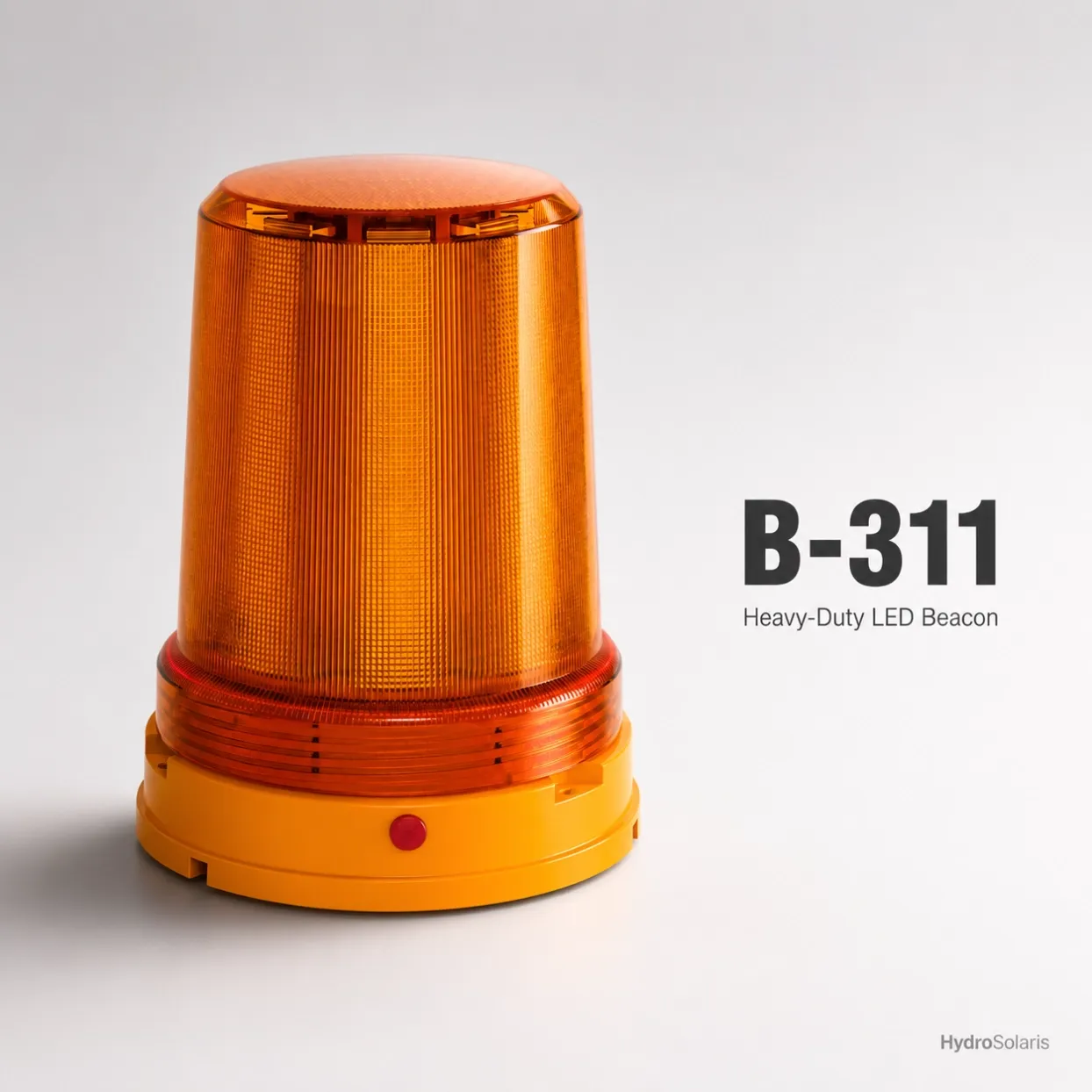
Heavy-duty LED beacons are purchased to solve a real jobsite-visibility problem. Procurement teams need to confirm that a warning light fits the machine, works with the electrical system and is supported by the correct evidence for the target market. The B-311 is a useful sourcing example: its brochure lists amber LEDs, 12V / 24V, 72 LEDs, 72W, IP67, screw mounting, a PC lens, die-cast aluminum base, 171 × 220 mm size, and ECE R65 / R10, RoHS and CE references.
Start with application risk, not a generic brightness claim
For construction machinery, forklifts, agricultural equipment and road-service vehicles, the practical requirement is reliable warning visibility at the real mounting position. Define vehicle type, roof or body location, sightlines, work environment and destination market before quotation. This reduces the risk of buying a light that looks suitable in a catalog but cannot be installed or supported correctly.
How to verify ECE R65 and R10 references
A brochure reference is the beginning of due diligence, not its conclusion. Request documents that identify the exact part number, voltage, lens version and function. Compare the document with the lens marking and production-intent sample. Keep this evidence in the approved product file before using approval language in a tender, catalog or vehicle program. Use qualified local compliance advice when vehicle homologation or local road rules apply.
IP67 should be checked on the complete supplied version
The B-311 brochure lists IP67. This can matter for machines exposed to rain, dust, washing and road spray because water-related failure can create downtime and warranty cost. Ask for model-specific test evidence and confirm the final housing, lens, cable exit and connector. Correct sealing, cable routing and mounting practice remain essential on the finished machine.
Mechanical fitment is a purchasing issue
The screw mount, PC lens, die-cast aluminum base and 171 × 220 mm envelope affect roof clearance, bracket design and serviceability. Request the dimensional drawing, hole pattern, cable exit, fastener guidance and vibration information. Install a sample on the intended production surface before volume release. This can reduce rework and improve replacement consistency.
12V / 24V does not replace electrical validation
A dual-voltage product may simplify inventory across mixed fleets, but buyers should still confirm current draw, polarity, lead length, connector, electrical protection and vehicle-system requirements. Document the final choice with the golden sample so production and after-sales teams use the same reference.
Avoid converting LED count into a performance promise
The brochure lists 72 PCS LEDs and 72W. Do not derive luminous output, flash behavior or legal suitability from these figures without supporting technical information. Ask for electrical data, relevant photometric information and the approved bill of materials. This protects product listings from inaccurate claims.
RFQ checklist
Include vehicle type, destination country, annual quantity, voltage, amber-lens requirement, mounting position, wiring option, IP requirement and required approval documents. Approve a pilot order with final packaging, label artwork and traceability before volume purchase.
An evidence-led process—correct application, verified documents, secure installation and controlled samples—helps OEMs, importers and distributors source a beacon that is easier to sell, install and support.
