Jul 22, 2026Camper light
How Should RV and Camper Distributors Build an Exterior LED Lighting Range?
A B2B guide to selecting permanent exterior scene lights and portable dimmable lighting kits for RV, camper, caravan and conversion product ranges.
How Should RV and Camper Distributors Build an Exterior LED Lighting Range?
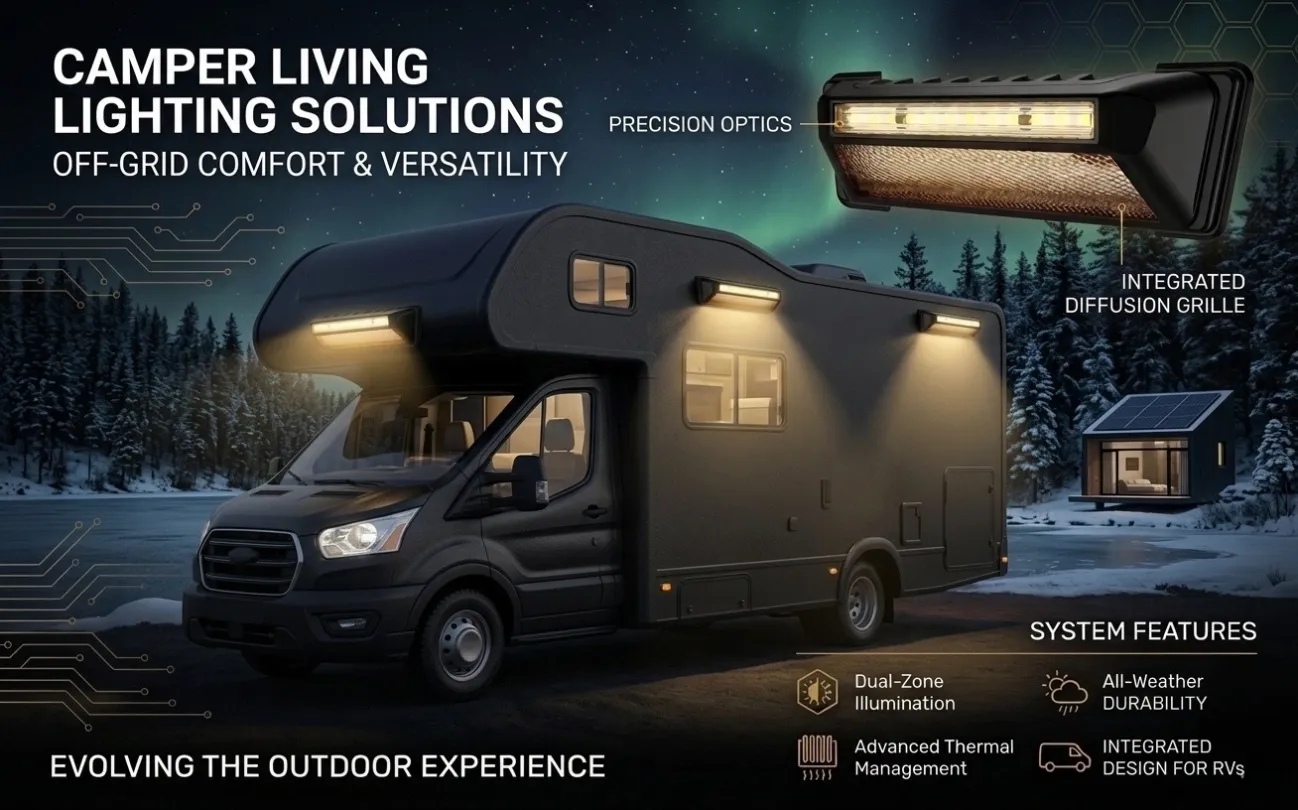
An exterior RV lighting range should solve several different jobs rather than rely on one “all-purpose” lamp. Buyers may need an entry or awning light, a wider scene light for an exterior work area, and a portable kit for a tent, trunk or under-hood task. Treating these as separate use cases makes product selection clearer and reduces mismatched samples.
This guide uses two directions shown in the HydroSolaris catalog: the C-405A/C-405B surface-mount camper scene-light family and the C-401 dimmable camping light-bar kit. Exact power, output, sealing, certification and connector details must be confirmed for the selected model before quotation or market launch.
- Define the vehicle and the job before comparing lamps
Start with the vehicle type: camper van, motorhome, caravan, travel trailer or conversion platform. Then define where the light will be installed and what the user needs to see. An entry light near a door has different glare and coverage requirements from a scene light above an exterior storage bay. A portable camping kit has different wiring and mounting needs from a permanently installed exterior lamp.
Ask the vehicle builder or distributor to provide the mounting position, available surface area, electrical system, cable route and target market. Photographs and a simple dimensioned sketch are often more useful than a request for “the brightest RV light.”
- Separate permanent exterior lighting from portable task lighting
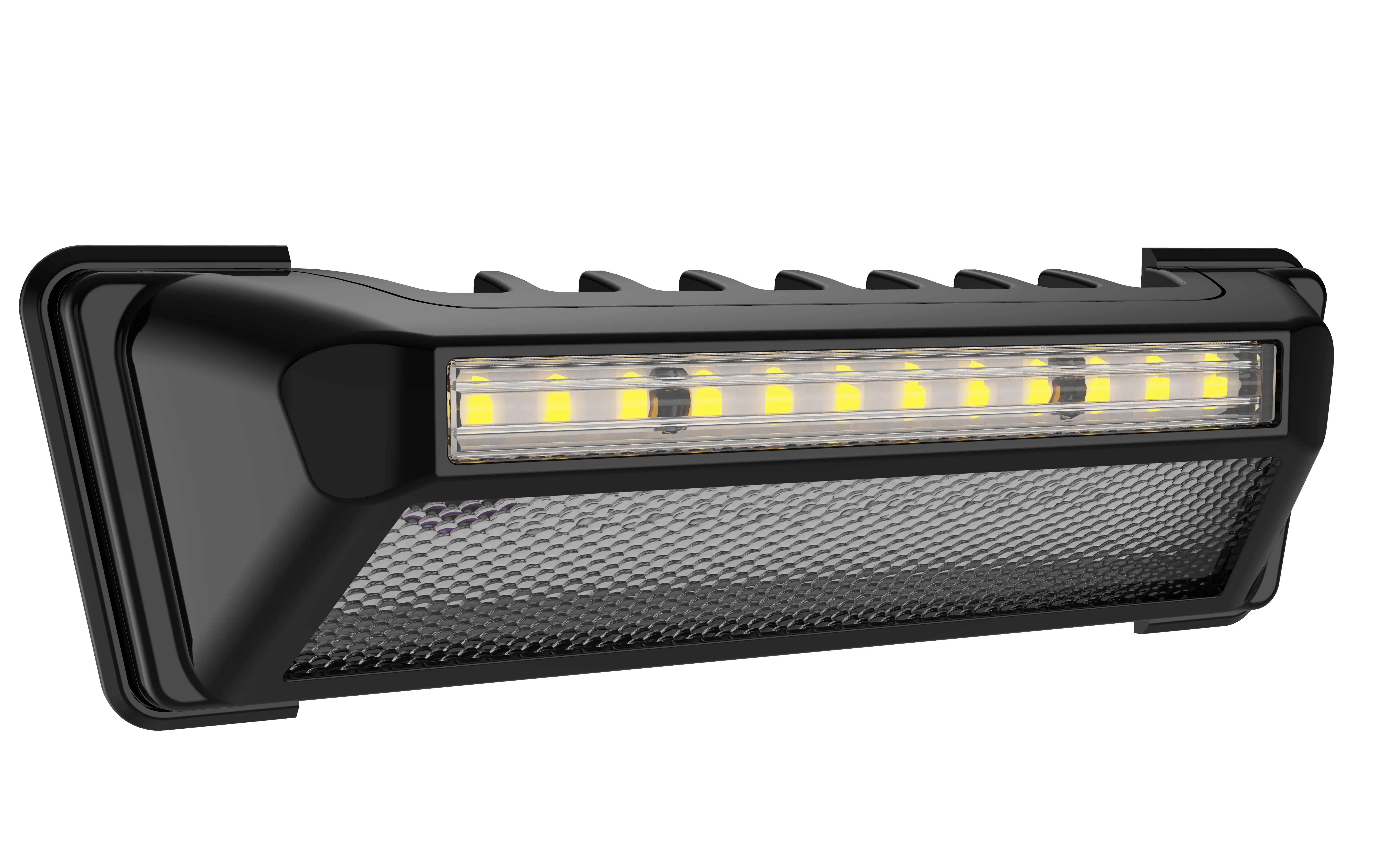
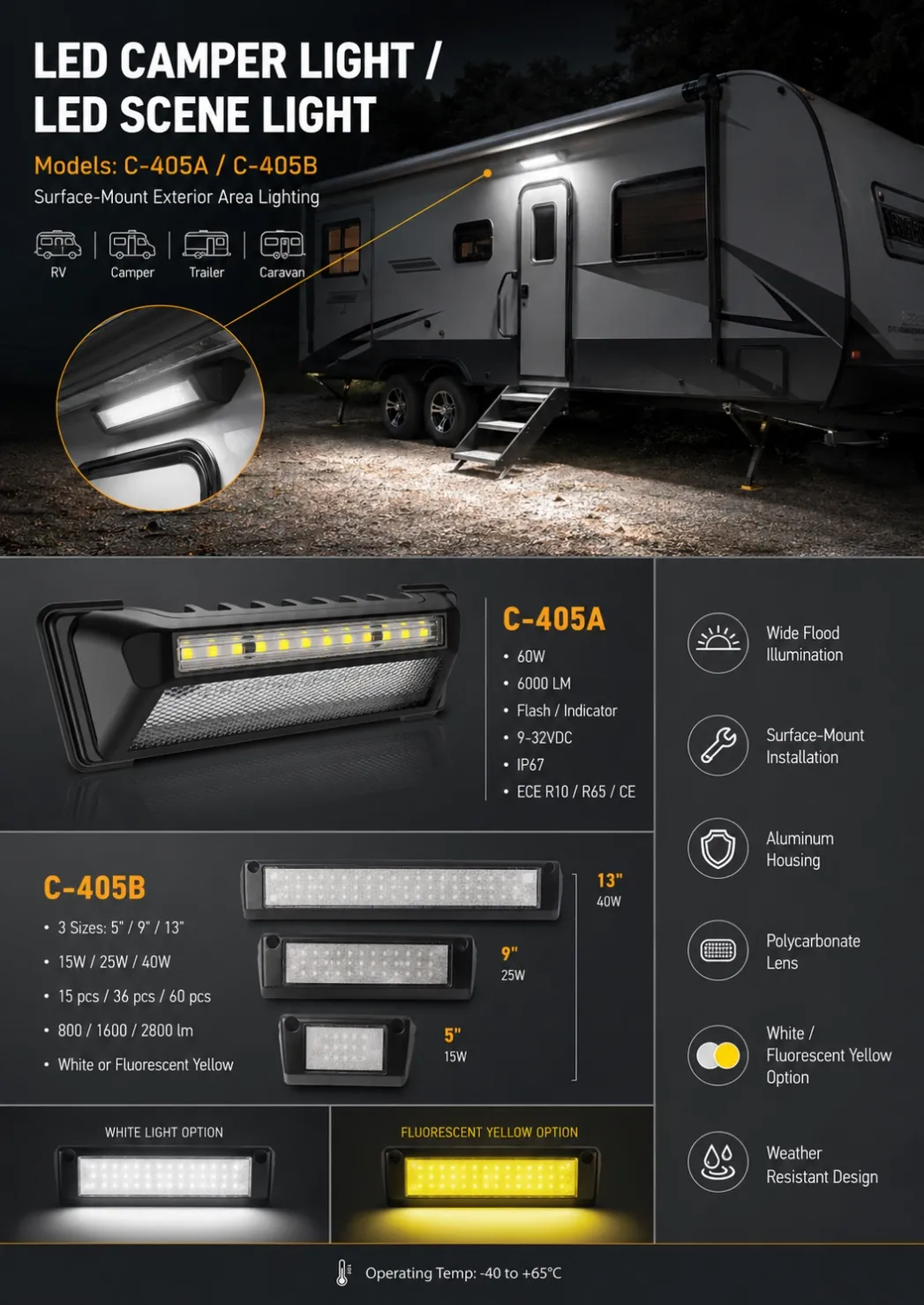
The C-405A/C-405B direction is intended for surface-mounted exterior area lighting on RVs, campers, trailers and caravans. The catalog presents a low-profile rectangular format and wide-area illumination. Before selecting either version, confirm body dimensions, mounting-hole locations, cable exit, lens distribution and whether the housing profile works with doors, awnings and body trim.
The C-401 direction is a portable four-bar kit. The catalog shows four LED bars, a dimmer controller, a 12V adapter, extension cables, a splitter and mounting accessories. That architecture can support tent and awning lighting, trunk ambience and under-hood work, but the exact contents of the production kit should be agreed in the order specification and packaging approval.
- Confirm the electrical system and control method
Do not assume that every RV project uses the same 12V arrangement. Confirm nominal voltage, allowable voltage range, polarity protection, connector type, cable length and current draw for the selected model. For a dimmable kit, also confirm how the dimmer behaves after power cycling and whether the control range is comfortable at both low and high settings.
For permanent lamps, review the vehicle harness and service access. For portable kits, check adapter compatibility, splitter layout and how the cables will be stored. A kit that is easy to demonstrate but awkward to repack can create avoidable complaints for distributors.
- Evaluate usable light, not only a lumen number
The catalog includes power and output figures for some camper-light models, but a purchasing decision should not rely on a headline number alone. Ask for the exact datasheet and compare beam spread, glare at eye level, uniformity, colour temperature and the area that must be illuminated.
A high-output lamp mounted beside an RV door can be uncomfortable if the optical distribution is wrong. A lower-output bar may be more useful inside an awning if the light is even and the dimmer has a practical low setting. Approve samples at the intended mounting height and view them from the positions used by passengers, technicians and nearby campsite users.
- Check installation and serviceability
For surface-mount lights, verify the mounting template, fasteners, gasket or sealing method, cable exit and required rear clearance. Confirm whether the lamp can be replaced without removing interior trim. For the portable kit, check magnets, clips or straps on the intended surfaces and make sure the cable path does not create a trip or snag risk.
A useful sample review includes installation time, cable routing, connector access, aiming, cleaning and removal. These practical checks often reveal more than a bench test.
- Treat outdoor suitability and compliance as model-specific
Do not publish a waterproof, road-legal or certification statement unless the exact model documentation supports it. Ask the supplier to identify the test standard, report or approval number, model scope and any installation conditions. If certification is still under confirmation, mark it as pending in the product brief and sales material.
For an RV exterior-light project, the relevant requirements can differ by market and by whether the lamp is a work, scene, position or warning function. The importer or vehicle builder should confirm the final legal classification and installation rules in the destination market.
- Build the range around clear customer decisions
A distributor can make the range easier to sell by organising it around decisions customers already understand:
• permanent entry or awning lighting;
• wider exterior scene or service-area lighting;
• portable dimmable lighting for tents, trunks and maintenance;
• standard sourcing versus private-label packaging or OEM/ODM development.
Avoid publishing several near-identical products without explaining why each exists. A smaller range with clear mounting, voltage and application differences is easier for sales teams to recommend and for customers to install correctly.
- Use a documented sample-approval process
Before a bulk order, confirm the model code, dimensions, voltage, power, optical function, colour temperature, cable and connector, mounting accessories, packaging contents, label artwork and required documents. Install the sample on the target vehicle or a representative panel. Record the approved configuration so production checks use the same reference.
For a custom project, HydroSolaris can discuss housing details, cable and connector choices, packaging and product-line positioning from the brief through feasibility, sampling, assembly, testing and production support. Confidential development requirements should be agreed before drawings or customer-specific information are shared.
Next step
Review the Camper & RV Lighting direction at https://www.hsautolight.com/camper-rv-lighting or share a vehicle layout and project brief through https://www.hsautolight.com/contact-us. We will confirm model-specific parameters and documentation before making a recommendation.