LED rear lamps
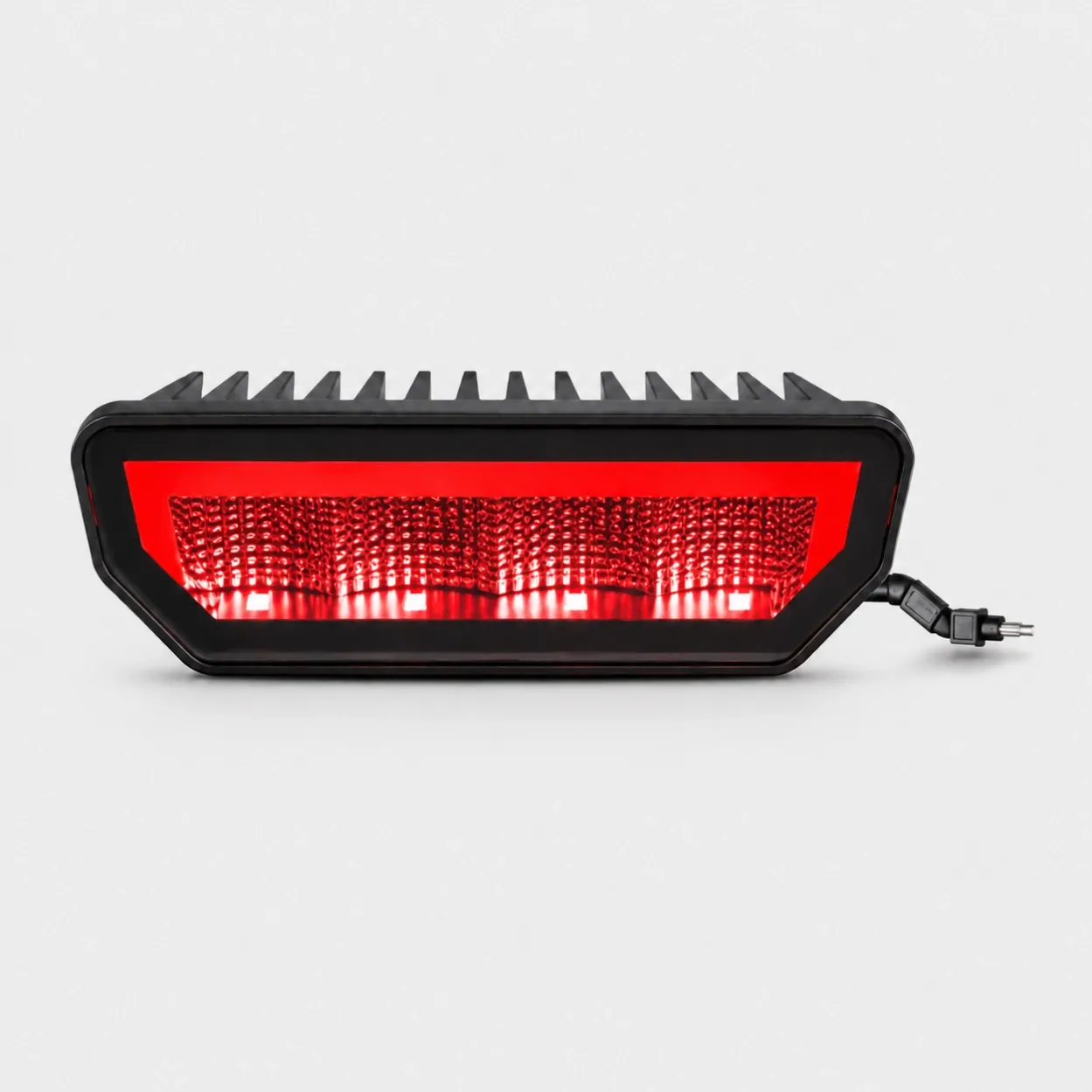
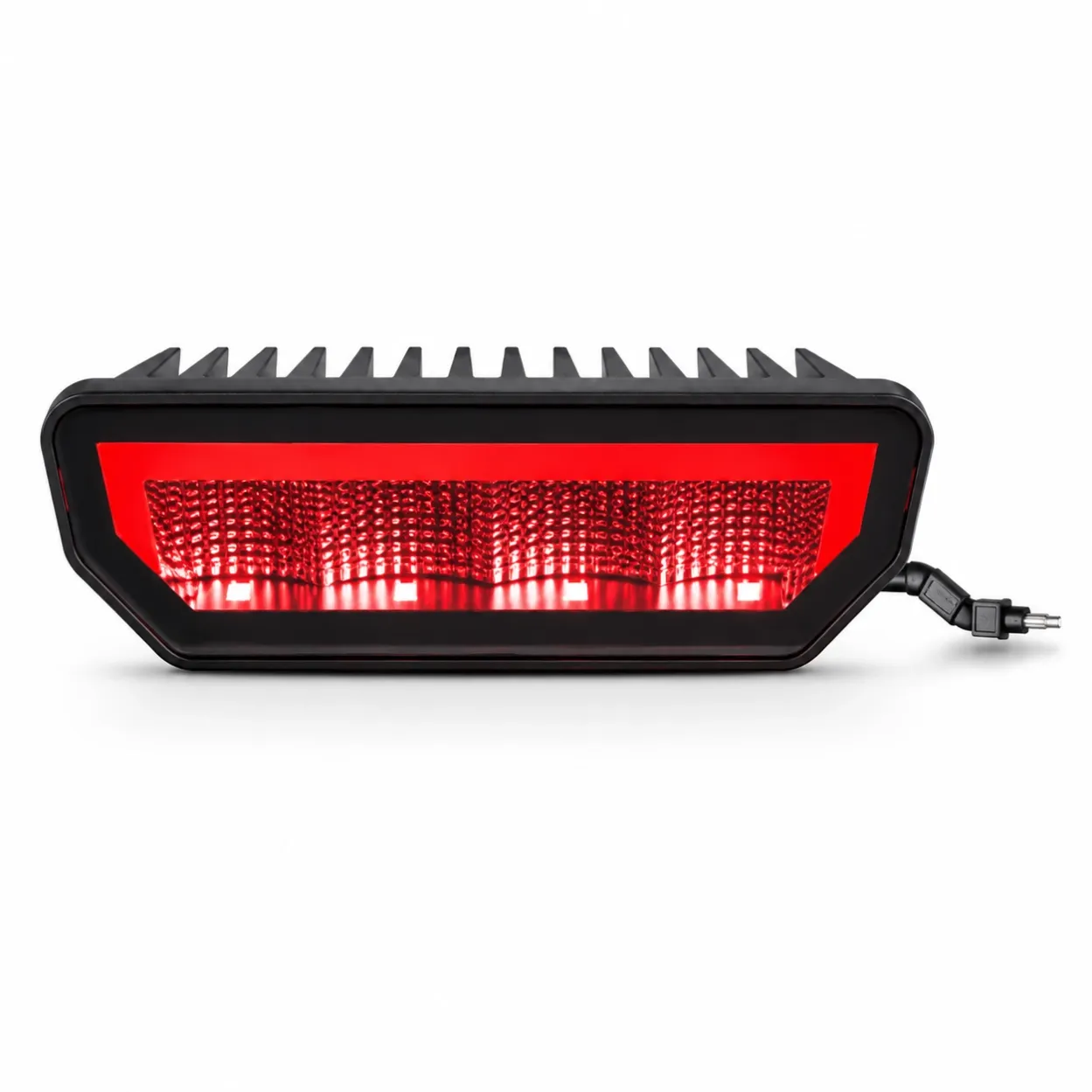
814B 18W Red LED Rear Position Light | 1800 lm, 10–48V, IP67
814B compact red LED rear position light for trucks, pickups, trailers and special vehicles. 18W, 1800 lm, 10–48V DC, OSRAM LEDs, flood beam, 136.5 × 70 × 48 mm, aluminum housing, PC lens, IP67 and brochure-listed R10.
Specifications
- Model
- 814B
- Power
- 18W
- Luminous Flux
- 1800 lm
- Input Voltage
- 10–48V DC
- Function
- Red Position Light
- Beam
- Flood
- LED
- OSRAM
- Dimensions
- 136.5 × 70 × 48 mm
- Protection Level
- IP67
- Materials
- Aluminum Housing / PC Lens
814B 18W Red LED Rear Position Light for Truck and Special-Vehicle Programs
The 814B is a compact red LED position light developed for truck, pickup, trailer and special-vehicle applications where rear identification and a consistent illuminated appearance are required. Its 136.5 mm width gives buyers a smaller alternative to the longer 814A while retaining the same 70 mm depth and 48 mm height.
For a B2B purchaser, a red lamp is not approved merely because it looks bright in a studio photograph. The buying decision must account for mounting position, visibility at the required angles, electrical compatibility, repeatable output, installation protection and destination-market rules. The 814B specification helps buyers screen those issues before investing in packaging or inventory.
How the specification addresses purchasing risk
• 18W and 1800 lm provide a defined output reference for sample comparison and incoming-quality checks. A documented figure helps importers avoid vague “high brightness” claims that are difficult to control between shipments.
• The 10–48V DC input range allows one version to cover common low-voltage commercial-vehicle platforms. Fewer voltage-specific SKUs can reduce forecasting errors, split inventory and slow-moving stock.
• A flood beam provides broad nearby visibility rather than a narrow long-range hotspot. This matters for rear or upper-body position-light duties where recognition across an area is more relevant than projecting far down the road.
• The compact 136.5 × 70 × 48 mm envelope gives body builders more freedom where roof rails, canopy edges, body seams or rear structures limit available space.
• The aluminum housing provides structural rigidity and supports heat dissipation. Better thermal control can improve consistency and reduce avoidable returns caused by heat-related degradation.
• The PC lens provides a practical optical surface for vehicle use. It supports repeatable molding and impact resistance while keeping the assembly compact.
• A 304 stainless-steel bracket helps reduce corrosion-related service issues at the mounting point.
• IP67 is the declared website protection level. This supports dusty and wet operating environments, provided the final cable entry, connector and vehicle installation are also protected.
• R10 is listed in the supplied brochure. The certificate and exact model scope should be reviewed during buyer qualification; a brochure reference alone should not be treated as market approval for every installation.
Technical specifications
Model: 814B
Function: Red position light
Power: 18W
Luminous flux: 1800 lm
Input voltage: 10–48V DC
LED: OSRAM
Beam: Flood
Color temperature: 5300–5700K (brochure specification)
Housing: Aluminum
Lens: PC
Mounting bracket: 304 stainless steel
Protection level: IP67
Brochure-listed compliance: R10
Dimensions: 136.5 × 70 × 48 mm
Brochure-listed service-life figure: 60,000 hours
Typical applications
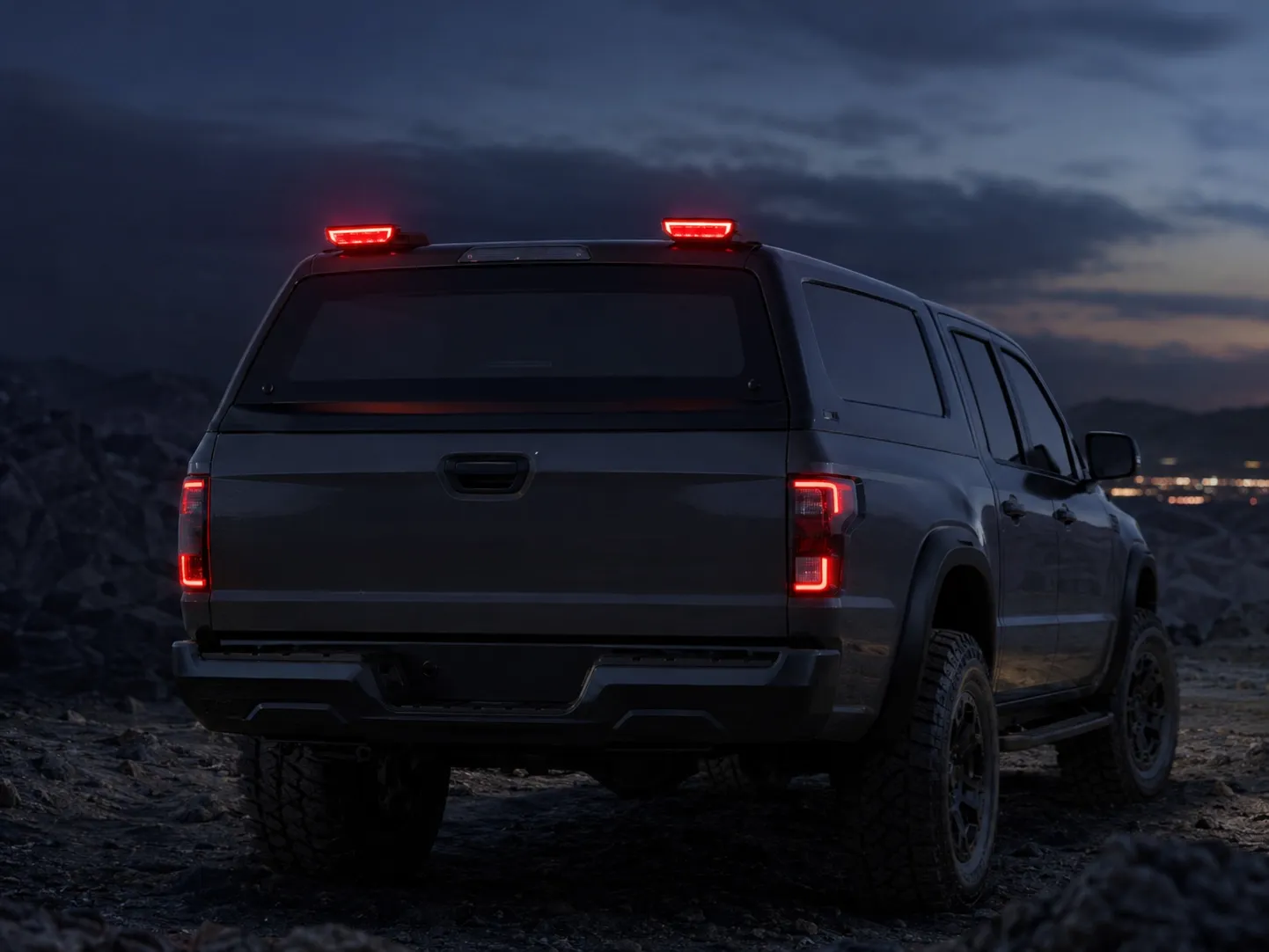
The 814B is intended for position-light and auxiliary visibility use on trucks, pickups, trailers, canopies and special-purpose vehicles. The supplied application material shows roof-mounted red lamps on a pickup-style vehicle. Final mounting and road-use suitability must be confirmed against local regulations and the buyer’s own vehicle approval process.
Why target customers may choose this format
Importers can add a compact red lighting option without introducing a separate voltage version for each vehicle group. Brand owners can define a clear sample standard using the specified power, output and dimensions. Truck-body builders and equipment manufacturers may use the compact housing where longer lights interfere with doors, rails or body panels. Fleet upfitters can standardize an auxiliary visibility package across multiple vehicle types, subject to installation approval.
Installation points to settle before ordering
The buyer should specify mounting position, lamp orientation, bracket angle, cable exit, connector type and cable length before sample sign-off. On-vehicle testing should include visibility from required directions, reflections from nearby bodywork, night-time appearance, water path around the cable entry and vibration at the selected mounting point.
Because the lamp is red, buyers must pay particular attention to local rules controlling color, location and permitted functions. A good mechanical fit does not replace regulatory suitability.
Sample and supplier qualification checklist
- Verify the 136.5 × 70 × 48 mm envelope on the real vehicle.
- Confirm red output and flood coverage at the intended mounting position.
- Test operation across the target vehicle’s voltage range.
- Inspect bracket material, fastener access and cable strain relief.
- Review R10 documentation and match the certificate scope to model 814B.
- Confirm IP67 sealing expectations, connector treatment and installation instructions.
- Agree on packaging, labeling, batch traceability and pre-shipment inspection criteria.
- Run application-specific vibration, thermal and water-ingress validation before mass ordering.
FAQ
Can the 814B be used as a universal rear lamp?
It is described as a red position light. The buyer must confirm whether its color, function and mounting position are legal for the target vehicle and market.
Does the 10–48V DC range mean no electrical testing is needed?
No. The broad input range can simplify SKU planning, but vehicle-level testing is still required for switching behavior, transient conditions, cable protection and EMC.
Why is IP67 used when the brochure artwork shows a higher number?
The website applies a maximum declared level of IP67. Final installation sealing also depends on connectors, cable routing and mounting quality.
What should be included in an RFQ?
Provide annual demand, target country, vehicle type, mounting location, connector and cable requirements, private-label or packaging needs, and required compliance documents.
B2B inquiry guidance
For a useful quotation and sample plan, share drawings or photos of the mounting area together with the target vehicle voltage and market. This allows the supplier to check dimensions, cable routing and documentation needs before samples are shipped, reducing approval delays and preventable revisions.