Jul 22, 2026LED WORK LIGTH
Can a Compact 18W LED Work Light Fit Forklift Applications? 9 Buyer Questions
Nine questions forklift dealers and OEM buyers should answer before sourcing a compact 18W LED work light, including fitment, glare, beam, voltage, tests and production consistency.
Can a Compact 18W LED Work Light Fit Forklift Applications? 9 Buyer Questions
A compact LED work light can look ideal for a forklift because space around the mast, overhead guard and cab is limited. Yet fitment alone is not enough. The lamp must illuminate the intended zone without creating excessive reflection or blocking service access.
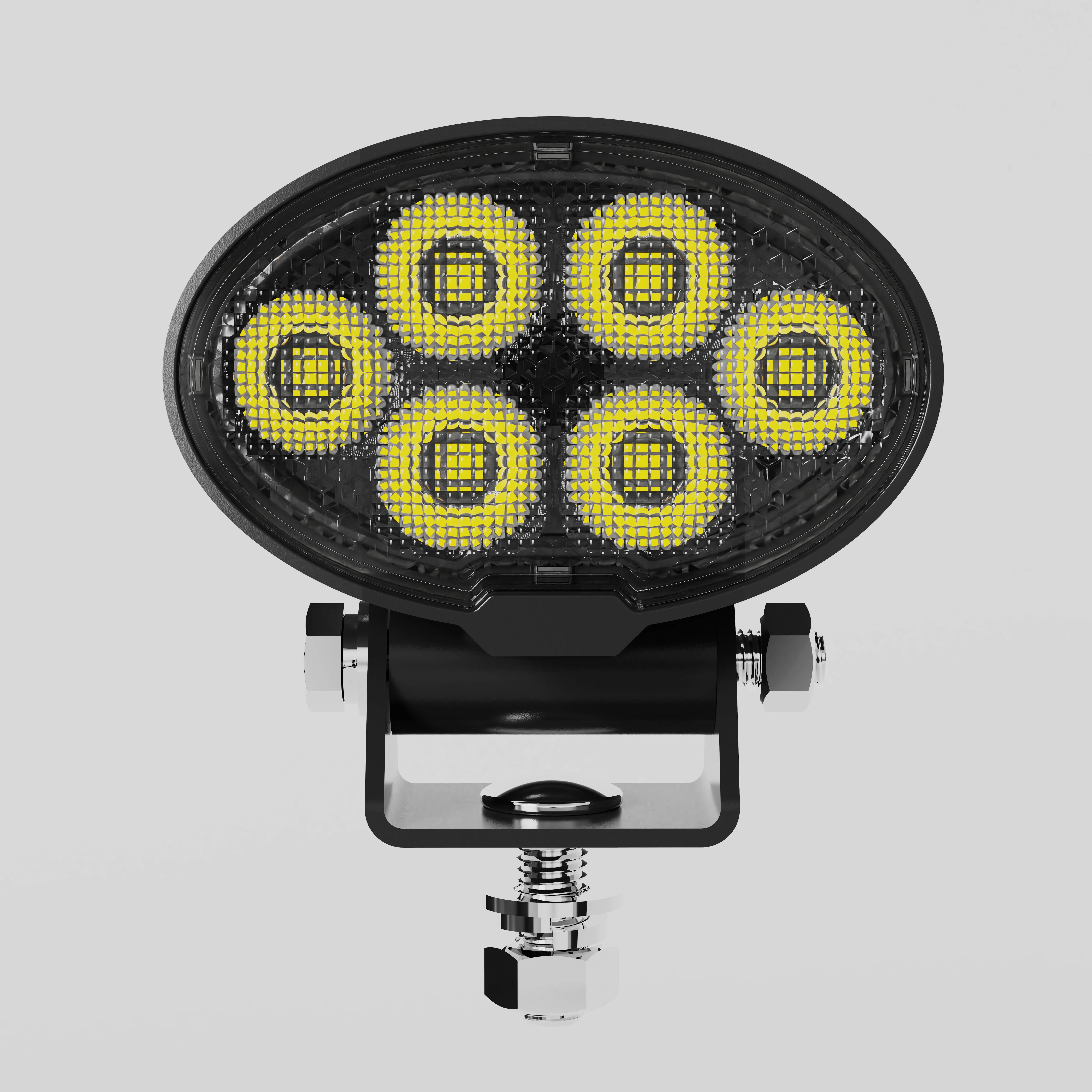
The WN18O is a compact oval design with six visible optical modules and an adjustable U-bracket. Estimated nominal power is 18W, calculated from six modules at approximately 3W each. Estimated effective output is about 1,260 lumens. These are engineering estimates and require sample verification.
Before an importer, forklift dealer or warehouse-equipment OEM releases an order, nine questions should be answered.
- Where will the lamp be installed?
Mounting on an overhead guard, mast area or rear structure changes the required beam and mechanical protection. Provide a drawing or photograph with dimensions. This reduces the risk of receiving a lamp that interferes with moving parts or maintenance access.
- What area must be illuminated?
A general forward work area, a close loading zone and a rack-facing vertical surface require different beam behavior. The product image does not confirm a beam pattern. Test a beam sample on the actual truck rather than assuming that an oval lens means a particular distribution.
- Could the lamp create glare or reflections?
Warehouse floors, shrink wrap, metal racks and glass can reflect light toward the operator. More wattage can make this worse. Evaluate the lamp from the seated operator position and from nearby pedestrian viewpoints. The business value is fewer operator complaints and less need to relocate installed lamps.
- Is 18W the actual input power?
The estimate for WN18O is based on visible module count. Ask for measured current at the target voltage. This helps the buyer confirm harness and fuse capacity and prevents disputes caused by chip-wattage marketing.
- What voltage range is needed?
Forklift electrical systems vary. The current planning target of 10–32V DC must be confirmed on a sample and may not cover every forklift platform. If the project uses a higher-voltage traction system, a suitable converter or different lamp design may be required. Never assume compatibility from appearance.
- Is the bracket suitable?
An adjustable U-bracket can simplify aiming and accommodate prototype changes. The commercial value is lower installation rework. The bracket, fastener and housing interface still need vibration and impact validation for the mounting location.
- Which environmental tests apply?
A warehouse application may still involve dust, cleaning water, cold storage, outdoor yards or vibration. Define the required ingress, temperature and vibration tests. Do not convert a general product-family claim into a model-specific claim without evidence.
- Can the supplier maintain consistency?
Ask how LEDs, optics, drivers, wires and brackets are controlled between lots. Approve a golden sample and require notice before component changes. This reduces the chance that a repeat order produces a different beam or connector.
- What does the warranty process look like?
A low unit price can be offset by slow failure analysis and replacement shipping. Agree on traceability, evidence required for claims, response time and responsibility for confirmed defects. Distributors should also retain installation guidance so products are not returned because of incorrect wiring or aiming.
A practical evaluation sequence
First confirm the mounting envelope and voltage. Then compare beam samples at the normal working distance. Run a pilot installation on representative forklifts and collect operator feedback. After optical and mechanical approval, test a pilot batch with final labels and packaging.
The WN18O may be a useful compact platform for forklifts and material-handling equipment, but no responsible supplier should promise application success from estimated wattage alone. A precise installation brief and sample test are the fastest route to a lower-risk purchase.