Jul 22, 2026LED WORK LIGTH
How Should Fleet Buyers Specify a 30W Oval LED Work Light for Service Vehicles?
A practical specification guide for fleet, truck-upfitter and distributor buyers comparing 30W oval LED work lights for service vehicles, reverse areas and utility equipment.
How Should Fleet Buyers Specify a 30W Oval LED Work Light for Service Vehicles?
Fleet and service-vehicle buyers often ask for a “30W work light” as if wattage defines the product. It does not. Two lamps with the same nominal power can create different beam shapes, draw different current and require different installation work.
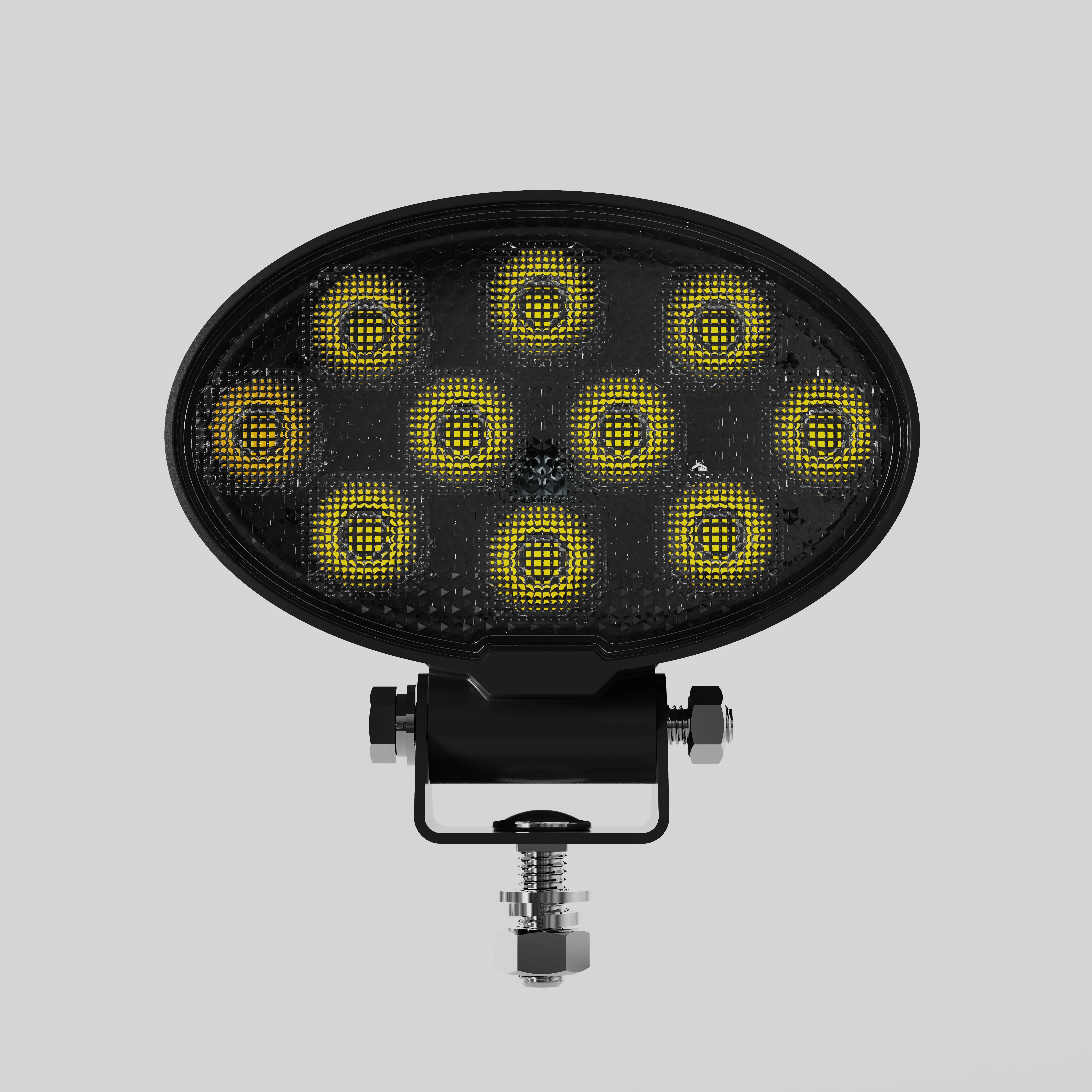
The WN30O is an oval design with ten visible optical LED modules and an adjustable U-bracket. Using approximately 3W per module, estimated nominal power is 30W. Estimated effective output is about 2,100 lumens. These values are engineering estimates and must be confirmed on samples.
Start with the job, not the catalog
A service truck may need light around tools, at a rear work area, beside a utility body or near a trailer connection. Each task has a different mounting height and desired illumination zone. If the buyer starts with a wattage target instead of the job, the installed lamp may create glare or leave the task area dark.
Define the work zone with distance, width and mounting position. For a fleet, this makes installations repeatable across vehicles. For an upfitter, it reduces time spent correcting lamp angles after delivery.
Is an oval housing useful?
An oval format may fit a curved panel or match an existing vehicle design better than a square lamp. The feature matters only if the full bracket and wire envelope fits the vehicle. Request the drawing and check tilt clearance.
The purchasing benefit is reduced modification and a consistent appearance across a fleet. This can also help a distributor offer a clear replacement or upgrade option.
Do not confuse work-light use with an approved reversing lamp
If a lamp is intended for reversing or road-adjacent use, the destination market may require a specific approval and installation rule. The current source material does not support a certification claim for WN30O. Buyers must confirm applicable regulations and request model-specific evidence before marketing it as a regulated road function.
This protects importers from compliance risk and prevents product descriptions from making unsupported claims.
Verify electrical data on the vehicle platform
The estimated 30W value is based on module count. Ask for measured current at the target voltage and confirm start-up behavior, polarity protection and wiring requirements. The current planning target of 10–32V DC should be treated as provisional until sample testing is complete.
Accurate current data helps fleet engineers size fuses and harnesses. It also reduces troubleshooting when several auxiliary devices share a circuit.
Evaluate beam placement and glare
Install samples on a representative service vehicle. Observe the working area from the operator position and from nearby traffic or pedestrian viewpoints. Check reflections from polished body panels, mirrors and wet surfaces. Compare beam options if the light is concentrated in the wrong place.
The business value is better operator acceptance and fewer complaints that lead to relocation or replacement.
Control the repeat order
A fleet program may reorder the same lamp over several years. The purchase specification should define the approved LED, optic, driver, bracket, wire or connector, label and packaging. Require change notification and retain a golden sample.
Distributors should also maintain application notes so sales teams do not promise compatibility with every truck. Clear boundaries improve customer satisfaction and reduce warranty claims.
A practical pilot program
Begin with a small number of installation samples. After fitment and beam approval, order a pilot batch using final branding and packaging. Inspect current draw, beam appearance, mounting dimensions, wiring, label and carton protection. Record failures or installation questions and update the specification before volume release.
Questions for the supplier
Which measurements are confirmed and which are estimated? What beam samples can be supplied? What tests apply to this exact model? How are component changes controlled? What traceability is available? What is the response process for a confirmed field issue?
The WN30O gives fleet and truck-equipment buyers a new 30W-class oval work-light option. A high-quality inquiry should include the vehicle type, mounting location, target voltage, working distance, beam need, annual volume and compliance market. Those details allow the supplier to quote a product and validation plan that reduce purchasing risk.