Jul 22, 2026LED WORK LIGTH
How Should an Excavator OEM Compare a 45W LED Work Light Beyond Wattage?
A procurement guide to comparing 45W LED work lights for excavators and heavy equipment, covering beam usability, mounting, thermal checks, pilot orders and warranty risk.
How Should an Excavator OEM Compare a 45W LED Work Light Beyond Wattage?
When an excavator or loader program needs a new LED work light, purchasing teams often receive several quotations that all claim the same wattage. The products may look similar and the price difference may be small, but their real business risk can be very different.
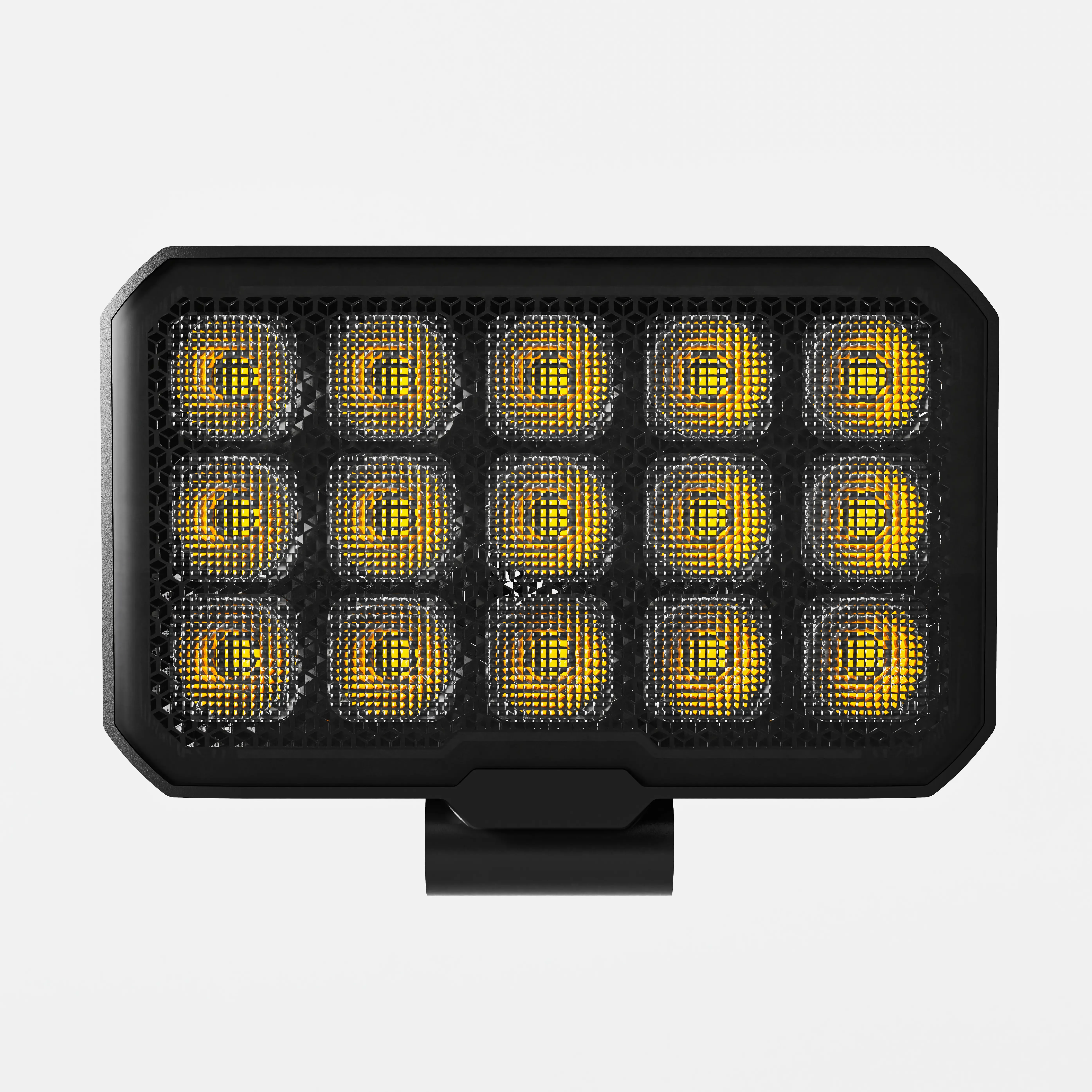
The WN45R is a wide rectangular design with fifteen visible optical modules. Based on approximately 3W per module, estimated nominal power is 45W. Using a conservative planning assumption, estimated effective output is about 3,150 lumens. These figures are not a substitute for electrical or photometric testing. They provide a useful example of how a B2B buyer should compare work lights beyond the headline number.
Question 1: Is the 45W figure an input value or a calculated label?
A buyer should ask for measured current at the relevant system voltages and calculate actual input power. Some quotations use LED chip rating rather than real lamp consumption. That can create incorrect wiring assumptions and make output comparisons unreliable. Measured current also helps the OEM size switches, relays, fuses and harnesses correctly.
The commercial benefit is fewer electrical redesigns and less risk of overheating a harness. For a distributor, accurate input data also reduces technical questions and returns.
Question 2: Does the beam illuminate the task or only create a bright hot spot?
Excavator lighting must cover the working area around the boom, bucket or travel path. A high lumen number can still produce dark areas if the beam is too narrow or is blocked by machine structures. Buyers should request beam samples and test them on the actual machine at normal mounting height.
The WN45R’s wide face makes it a candidate for broader work-area evaluation, but the supplied image does not prove a specific flood or spot pattern. Beam performance must be confirmed. This distinction protects the buyer from advertising an application that has not been tested.
Question 3: Will the mounting system survive the application?
A single-point adjustable mounting interface can simplify installation and aiming. That technical convenience matters commercially because it can reduce assembly time and make prototype positioning easier. However, heavy equipment creates sustained vibration and shock. The mounting stud, bracket interface and housing must be included in the validation plan.
Request the drawing, fastener specification and vibration test method. If the lamp is installed on a boom rather than the cab, define the more severe vibration environment in the purchase specification.
Question 4: How is heat managed?
LED life and output depend on junction temperature and thermal design. A visual product image cannot confirm thermal performance or housing material. The buyer should request temperature-rise data at the intended voltage and ambient condition. The supplier should also state whether output is regulated as the lamp heats.
This matters to warranty cost. A lamp that appears bright during a short inspection may lose output or fail prematurely in continuous operation. Thermal data is therefore a purchasing control, not just an engineering detail.
Question 5: Which documents apply to this exact model?
Do not accept a certificate for a different lamp family without checking model coverage. Define the EMC, ingress, vibration, temperature and material requirements for the destination market. The WN45R page intentionally does not claim certifications that are not supported by current source material.
A practical pilot-order process
Start with installation samples, agree on a golden sample, then place a small pilot order using production tooling and packaging. Inspect actual power, beam appearance, bracket dimensions, wiring, label, cosmetic finish and carton protection. Record the acceptance criteria before the pilot ships.
After the pilot, review any installation or operator feedback. A problem found at this stage is much cheaper than a warranty campaign across an imported container.
Questions to include in an RFQ
Provide the vehicle voltage, installation drawing, desired work zone, mounting position, wire or connector preference, required tests, annual volume, packaging and branding needs. Ask the supplier to separate confirmed data from estimates and state which tests are available for the exact model.
The WN45R estimated 45W and 3,150 lumens make it a potential heavy-equipment work-light platform. The final buying decision should depend on measured electrical data, useful beam distribution, mechanical validation and consistent production control.