Aug 14, 2026LED WORK LIGTH
How to Reduce Dark Zones with a Compact LED Flood Work Light
A B2B guide to beam coverage, mounting, voltage and sample testing when sourcing compact LED flood work lights for fleets and machinery.
How to Reduce Dark Zones with a Compact LED Flood Work Light
A fleet buyer may replace an old work light with a higher-wattage model and still receive complaints about dark areas. The reason is usually not a lack of power. Beam distribution, mounting height, aiming and the shape of the vehicle can matter more than the headline wattage.
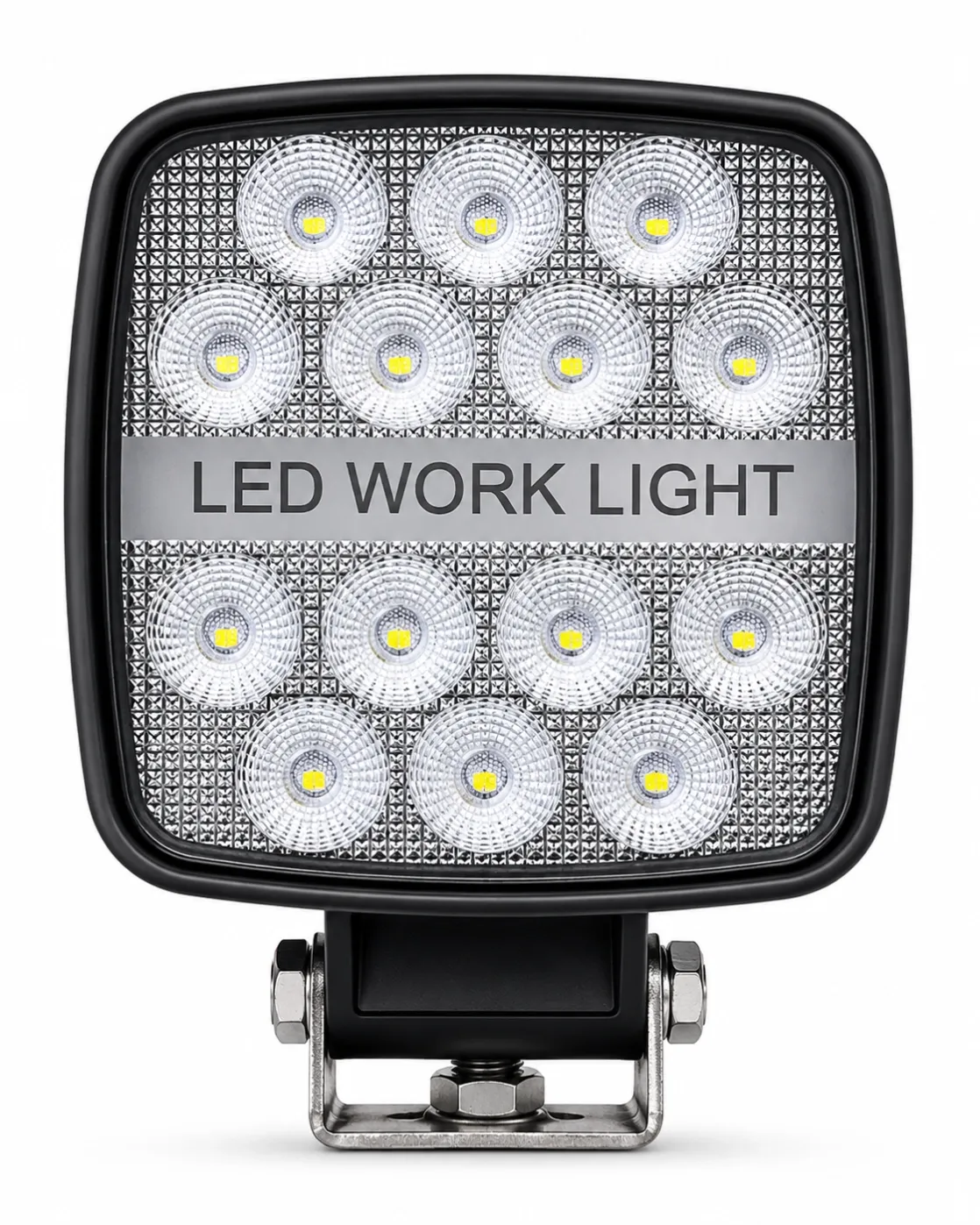
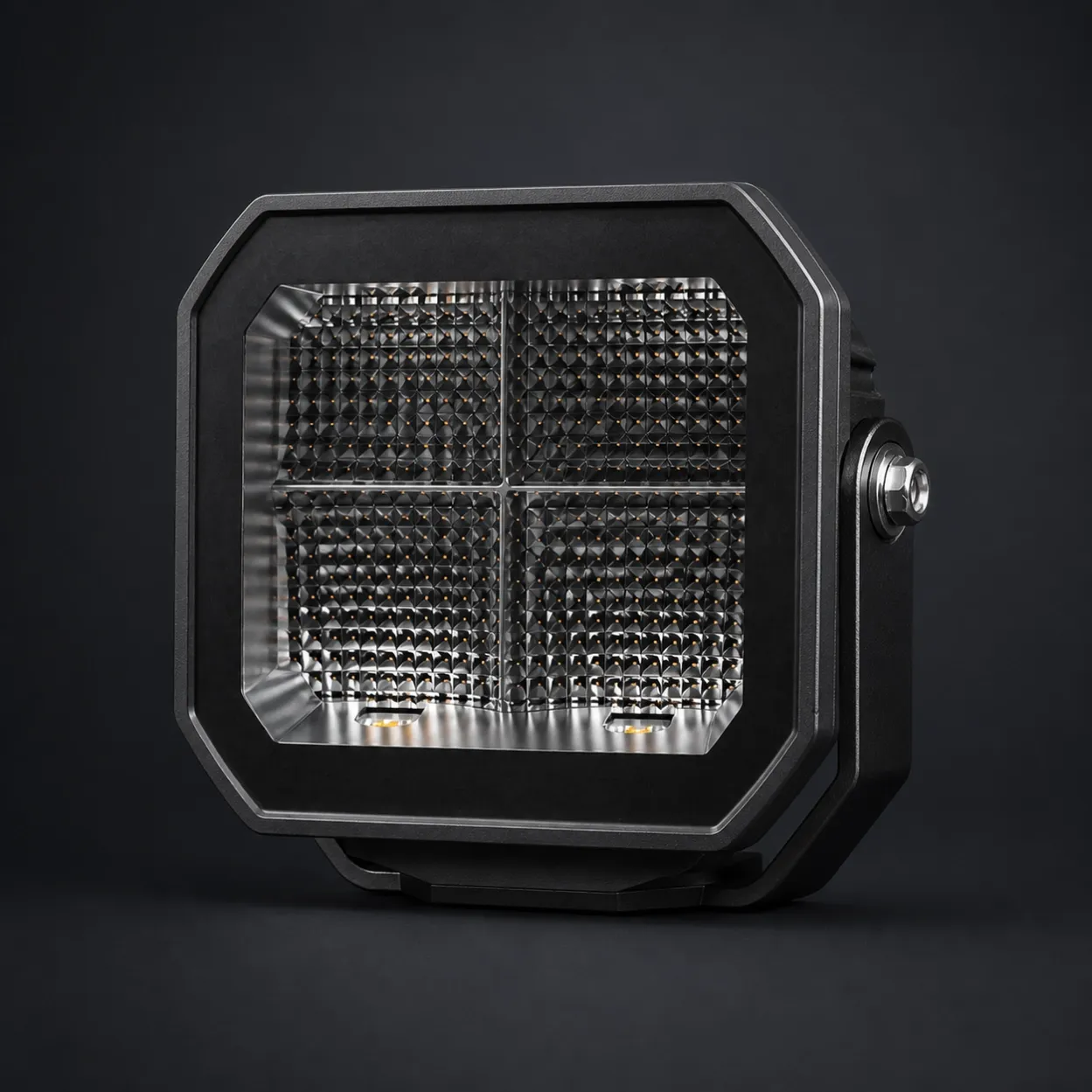
The 815A is a useful specification example: a compact 24W surface-mount LED flood work light with 2400 lm brochure-rated output, 10–48V DC input, OSRAM LEDs, 5300–5700K color temperature, aluminum housing, PC lens and an adjustable 304 stainless-steel bracket. On this website the protection rating is limited to IP67. The brochure also lists R10 and a service-life reference of up to 60,000 hours; buyers should verify the exact document and model scope.
Start With the Working Area, Not the Catalog Number
A flood beam is intended to spread illumination across a wider nearby area. That can suit reverse zones, service bodies, tractor surroundings, loading areas and slow-speed work. The purchasing value is improved usable coverage, not simply a brighter-looking lamp.
Before choosing a compact LED flood work light, define the area that the operator must see. Record the mounting height, required width, typical working distance and any bodywork that can block the beam. This prevents a common purchasing mistake: approving the lamp on a bench while ignoring the vehicle geometry.
Pain Point 1: Bright Foreground, Dark Working Zone
If a lamp is mounted too low or aimed too sharply downward, the foreground becomes bright and the operator's eyes adapt to that brightness. The working zone farther away can appear darker.
The 815A adjustable surface bracket lets the installation team change the angle. For a B2B buyer, that creates commissioning flexibility. Its business value is fewer application complaints and less need to replace the lamp when the real problem is aiming.
Validate the beam on the target machine at night. Compare several angles, photograph the result and record the approved bracket position. That record can be reused across repeat installations.
Pain Point 2: One Fleet, Several Voltage Platforms
Distributors and fleet upfitters may support 12V trucks, 24V commercial vehicles and higher-voltage equipment. Separate voltage-specific SKUs increase inventory and create picking errors.
The specified 10–48V DC range can simplify the assortment. However, wide voltage is not permission to ignore current, wiring and protection. Request measured current at the target voltage, confirm fuse size, wire gauge, polarity, cable length and connector capacity.
The commercial value comes from controlled standardization. A multi-voltage lamp may reduce SKU count only when the harness interface is frozen and technicians receive the correct installation instructions.
Pain Point 3: Compact Size Does Not Guarantee Fitment
The 815A body measures 107.6 × 70 × 94.9 mm, with brochure tolerance of ±1 mm. Buyers should also account for the bracket, bolt, cable bend radius, aiming movement and service access.
A lamp that fits in the CAD envelope can still hit a door, hydraulic hose or camera after aiming. Build a simple installation checklist around the full movement range. This reduces rework, installation time and return claims described as “wrong size.”
Pain Point 4: Warranty Claims Often Begin at the Interface
The brochure specifies an aluminum housing, PC lens and 304 stainless-steel bracket. These materials matter because work lights face vibration, water, dust and repeated adjustment. But warranty performance depends on the complete installation.
Inspect cable strain relief, connector sealing, fastener torque and bracket stability. On this website the maximum protection rating is IP67; ask for model-specific evidence and check the final connector and cable entry, not only the lamp housing.
A controlled installation lowers replacement labor and prevents disagreements about whether a failure came from the lamp, harness or mounting method.
Pain Point 5: Compliance Language Must Match the Document
The brochure lists R10. Importers and OEMs should request the applicable document, compare the model and marking, and retain it with the approved sample. Do not convert a brochure reference into a universal market claim.
This document discipline reduces regulatory and tender risk. It also makes repeat orders easier because purchasing, engineering and sales work from the same approved record.
Who Is Most Likely to Buy This Type of Light?
Fleet upfitters need wide-area task lighting and repeatable installation.
Truck and trailer equipment distributors need compact products with clear dimensions and multi-voltage coverage.
Agricultural and construction-equipment suppliers need lighting that can be tested around specific work zones.
OEMs need drawings, sample approval and controlled electrical interfaces.
Private-label brands need consistent product, packaging and documentation before committing to volume.
A Practical Sample Approval Plan
- Define the target vehicle, work zone and mounting height.
- Check the 107.6 × 70 × 94.9 mm body plus bracket movement.
- Test the flood beam on the actual vehicle.
- Measure current at the intended voltage.
- Run a continuous-operation thermal check and hot restart.
- Inspect bracket, fasteners, cable and connector after vibration testing.
- Review IP67 evidence and the R10 document scope.
- Freeze the golden sample, label, packaging and acceptance criteria.
- Use a pilot order before fleet-wide rollout.
Frequently Asked Questions
Is 2400 lm enough for a work light?
It depends on the beam, mounting and working distance. The brochure lists 2400 lm, but buyers should review photometric data and test the actual work zone.
Can 815A be used on both 12V and 24V vehicles?
The specified 10–48V DC range covers both. Confirm current, fuse, wire gauge and connector for the final installation.
Is a flood beam better than a spot beam?
A flood beam supports wider nearby coverage. A spot beam is usually considered when a narrower, longer-distance target is more important. The correct choice depends on the task.
What should an RFQ include?
Provide vehicle type, voltage, work zone, mounting position, annual quantity, connector, cable length, required documents, branding and packaging needs. A detailed RFQ helps the supplier quote the correct configuration and reduces sample rounds.
Final Purchasing Perspective
The business case for a compact LED flood work light is not higher wattage alone. It is the ability to deliver useful coverage, fit the vehicle, simplify a multi-voltage range and remain repeatable across production and service. Buyers who validate beam, mounting, electrical interface and documents before volume ordering can reduce warranty cost and improve end-user satisfaction.