Aug 14, 2026LED WORK LIGTH
Spot vs Flood: How to Specify a Compact LED Work Light
A B2B comparison of spot and flood work-light selection, aiming, fitment and validation for trucks, off-road vehicles and machinery.
Spot vs Flood: How to Specify a Compact LED Work Light
Many buyers compare compact LED work lights by wattage and lumens, then discover that the selected lamp illuminates the wrong area. A flood beam and a spot beam can share the same electrical rating yet produce very different operator results.
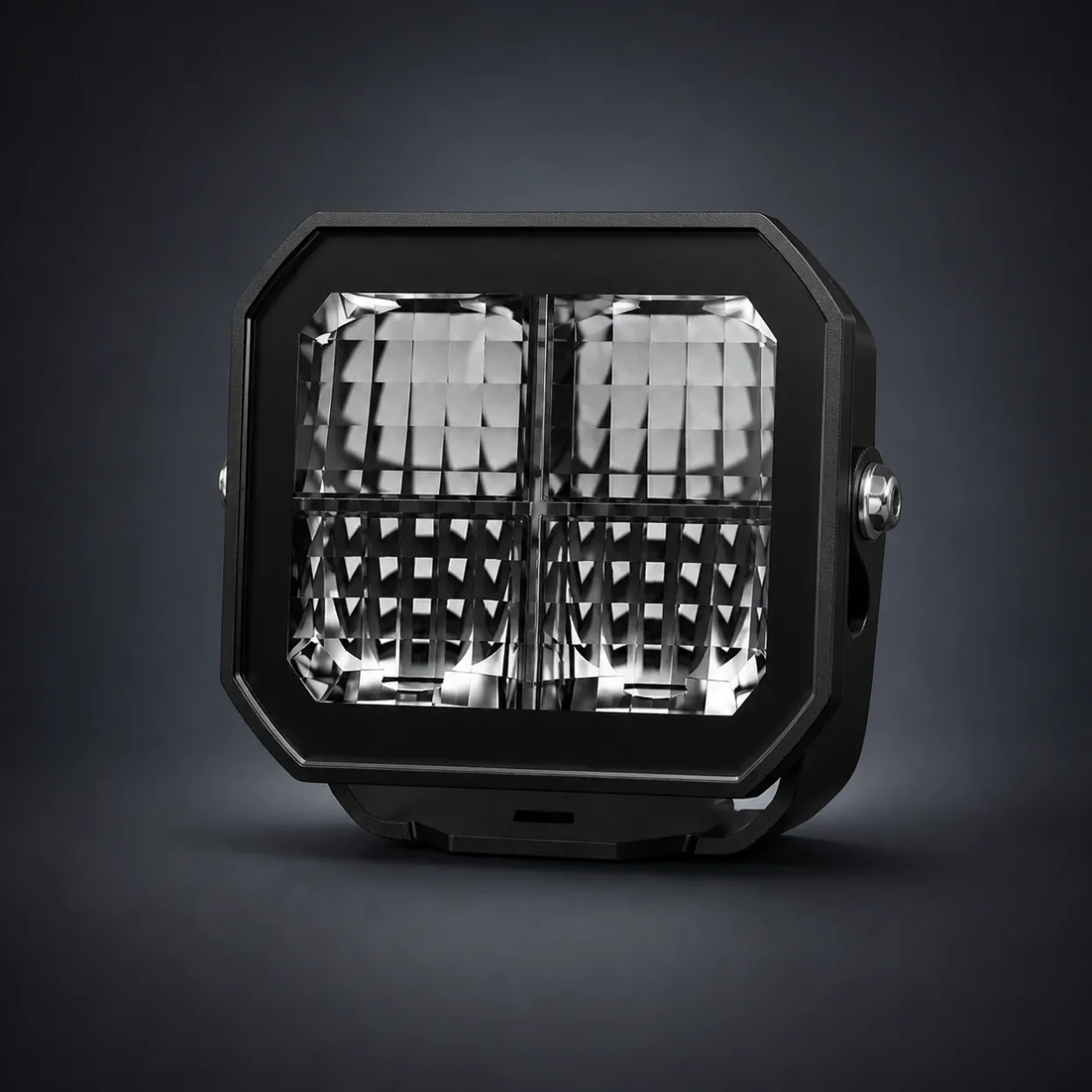
The 815C is a 24W surface-mount LED spot work light with 2400 lm brochure-rated output, 10–48V DC input, OSRAM LEDs, 5300–5700K color temperature, aluminum housing, PC lens and an adjustable 304 stainless-steel bracket. Its dimensions are 107.6 × 70 × 94.9 mm. This website lists IP67 maximum. The brochure lists R10 and up to 60,000 hours as a service-life reference; buyers should confirm exact evidence and scope.
What Is the Practical Difference Between Spot and Flood?
A spot beam concentrates light toward a narrower, longer-distance target. A flood beam spreads more light across a wider nearby work area.
For a B2B buyer, the question is not which beam is “better.” The question is which beam matches the task. A recovery vehicle may need to see farther along a road. A tractor may need wide coverage around an implement. A machine can require both functions at different mounting positions.
Pain Point 1: Using Spot Optics for a Wide Task
If a spot lamp is used where the operator needs wide nearby visibility, the center may appear bright while the sides remain dark. This can lead to additional lamps, wiring changes and customer complaints.
Map the task area before selecting the beam. Record the required width and distance. If the target is narrow and farther away, a spot beam may use the available output more effectively.
The commercial value is fewer product exchanges and a clearer product range for distributors.
Pain Point 2: Aiming Errors Can Look Like Product Failure
A narrow beam is more sensitive to mounting angle than a wide flood beam. Small changes in bracket position can move the illuminated target significantly.
The 815C surface-mount bracket provides aiming flexibility. During sample approval, set the lamp at the actual vehicle height and load condition. Adjust it toward the required target, then record the approved angle and fastener torque.
This reduces field variation between installers and improves end-user satisfaction.
Pain Point 3: Long-Range Claims Need Photometric Evidence
A 2400 lm figure does not show beam reach, intensity or distribution. Request a photometric file or beam test for the exact 815C configuration. Compare the data with the required working distance.
Do not invent lux-at-distance claims from lumens alone. A supplier who provides measured data helps the buyer make a defensible engineering decision and reduces purchasing risk.
Pain Point 4: Surface-Mount Fitment Includes Bracket Movement
The housing measures 107.6 × 70 × 94.9 mm, but the installation envelope must include the adjustable bracket, bolt, cable route and aiming movement.
Check for interference with doors, cameras, mirrors, hoses and body panels. A compact housing can still cause problems if the installer cannot reach the fastener or route the cable safely.
Pain Point 5: Mixed Voltage Does Not Mean One Harness Fits All
The 10–48V DC range can support mixed fleets and reduce lamp SKUs. Electrical integration still requires measured current, wire gauge, connector capacity, fuse and polarity.
The business benefit is inventory simplification only when the harness and installation instructions are controlled.
Pain Point 6: Environmental Ratings Need Installed Verification
The website protection rating is IP67. Request model-specific evidence and inspect the complete system, including cable entry and connector.
The brochure lists an aluminum housing, PC lens and 304 stainless-steel bracket. These support a rugged product concept, but vibration, torque and cable strain relief must be checked on the actual machine.
Pain Point 7: Compliance References Require Document Control
The brochure lists R10. Confirm the exact model, marking and document scope before including the claim in a catalog or tender.
This avoids a common importer problem: receiving a technically suitable lamp that lacks the expected document trail for the destination market.
Which Buyers Are Most Likely to Need a Compact Spot Work Light?
Off-road and 4×4 brands may need focused auxiliary visibility.
Recovery and roadside fleets may need a narrow target beyond the immediate vehicle.
Construction and mining-equipment suppliers may illuminate specific remote work points.
Agricultural machinery dealers may combine spot and flood lamps for different zones.
Distributors can build a clear spot-versus-flood assortment around shared housing sizes.
Sample Test Plan
- Define the target distance and width.
- Compare spot and flood samples from the actual mounting position.
- Confirm the 107.6 × 70 × 94.9 mm housing plus bracket envelope.
- Record aiming angle and torque.
- Measure current at the target voltage.
- Run continuous operation and hot restart.
- Inspect bracket, cable and connector after vibration.
- Review IP67 evidence and R10 document scope.
- Approve the golden sample and packaging before volume production.
Frequently Asked Questions
Does a spot beam always illuminate farther?
A spot beam concentrates light, but real reach depends on optical intensity, mounting and aiming. Review photometric data and test the target distance.
Can a spot light replace a flood light?
Only if the working area is narrow enough. A wide nearby task usually needs flood distribution or a combination of beam types.
Is 815C compatible with 12V and 24V?
The specified 10–48V DC range covers both. Confirm current, fuse and wiring for the selected installation.
What should a commercial RFQ include?
Provide target distance, required width, vehicle, mounting height, voltage, quantity, connector, cable, documents, branding and packaging. This allows a supplier to evaluate the real optical and installation requirement.
Final Purchasing Perspective
A compact spot work light solves a specific visibility problem. Buyers create business value when they connect beam shape to a measured target, control the aiming process and approve the installed electrical and mechanical system—not when they compare wattage alone.