Jul 22, 2026LED WORK LIGTH
Why Does a Tractor LED Work Light Still Leave Dark Zones? A 24W Selection Case
A practical B2B guide to diagnosing dark zones in tractor lighting. Learn why beam pattern, mounting position and sample validation matter more than wattage, using the WN24R as an example.
Why Does a Tractor LED Work Light Still Leave Dark Zones?
A tractor can have several LED work lights and still leave the implement, wheel area or field edge poorly illuminated. For purchasing managers, this creates a difficult situation: the lamp appears bright in a catalog, but operators complain after installation. Replacing it with a higher-wattage unit may increase cost and electrical load without solving the real problem.
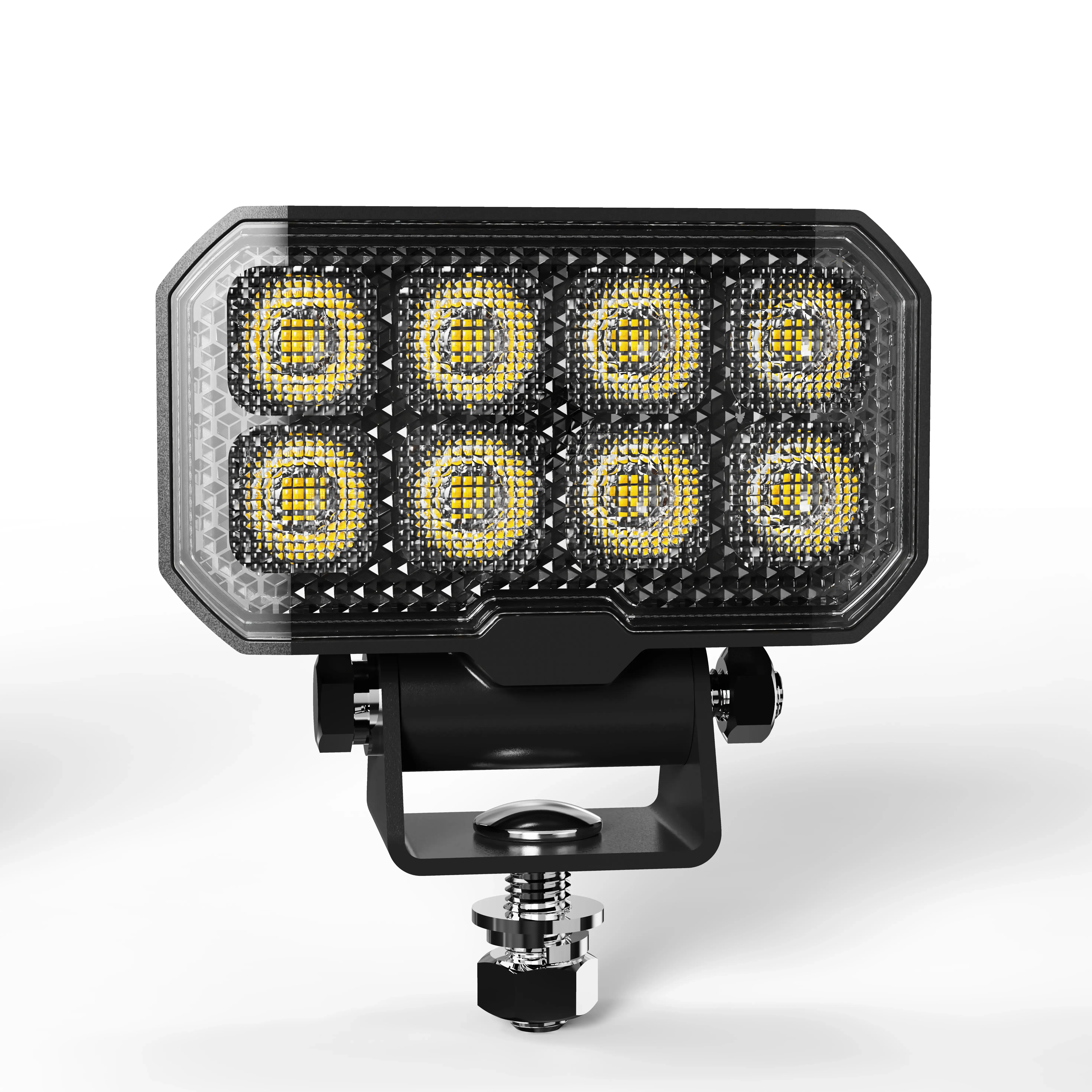
This article uses the WN24R rectangular work light as a specification example. It is a new eight-module design with an estimated 24W nominal power and approximately 1,680 effective lumens. Both values are engineering estimates based on visible module count, not laboratory results. The buying lesson is broader than this model: a useful tractor work light must be selected by beam placement, mounting geometry and verified sample performance.
The common buyer question: “Why is the center bright but the working area still dark?”
The usual cause is not insufficient total lumen. It is a mismatch between beam distribution and installation position. A narrow beam can produce a bright hot spot while leaving the near field or side area dark. A lamp mounted too low may be blocked by the hood or implement. A lamp mounted high but aimed incorrectly can create glare on dust, rain or the machine itself.
For an importer, this mismatch creates returns and difficult warranty conversations. For an OEM, it can delay vehicle sign-off because the lighting package must be reworked. The commercial value of early beam testing is therefore reduced rework, fewer complaints and a clearer product specification.
A practical tractor OEM selection scenario
Assume an agricultural-equipment manufacturer needs a compact work light for a cab corner. The available space suits a rectangular lamp, and an adjustable bracket is preferred for prototype aiming. An eight-module 24W-class product appears sufficient on paper.
The first step is not to approve mass production. The engineering team should install samples at the intended height and angle, then observe the complete working zone at night. The evaluation should check the near field, implement edge, turning area and reflections from the hood or mirrors. If the light creates a hot spot, the buyer should compare a different beam sample before increasing wattage.
The second step is to verify the electrical assumption. The WN24R estimate uses eight visible modules at approximately 3W each. Actual power, current draw and voltage range must be measured. If the tractor platform uses both 12V and 24V electrical systems, the supplier should confirm whether one version can cover both and provide test data.
The third step is environmental validation. Agricultural machinery is exposed to vibration, dust, moisture, chemicals and repeated temperature changes. The supplied product image does not prove an ingress rating or vibration standard. Buyers should define the required test plan and request results from production-intent samples rather than accepting a generic statement.
What should be included in the purchase specification?
A useful specification should include the model, dimensional drawing, mounting bracket and fastener, connector or wire length, target voltage range, maximum current draw, beam requirement, actual lumen test method, operating temperature, ingress test, vibration test, EMC requirement, label artwork, packaging and change-control procedure.
Importers should add a golden-sample approval and define cosmetic tolerances for the lens, housing and bracket. Brand owners should confirm how batch codes or traceability labels will be applied. These details help control warranty costs because both parties know what must remain consistent.
Why an adjustable bracket has business value
An adjustable bracket is a simple feature, but it matters because the same lamp may be installed on different cabs or implements. The technical benefit is easier aiming. The purchasing benefit is less installation rework and a broader range of potential applications. This value only applies if the bracket strength, fastener and vibration resistance are validated for the vehicle.
Questions to ask before requesting a quotation
Ask the supplier which beam samples are available, whether the voltage and current data are measured, what environmental tests apply to this exact model, how production changes are controlled, and what inspection record accompanies each lot. Also provide the supplier with the intended mounting position. A useful quotation requires more than a target price.
The WN24R can be evaluated as a compact rectangular tractor work light, but its estimated 24W and 1,680 lumens should be treated as starting data. A well-designed sampling plan is what turns a visually attractive product into a lower-risk purchasing decision.